Last updated November 18, 2026


Free written scope consultation - allowances, timeline, and change-order rules on paper before a single trade is scheduled
Bathroom Remodeling Troubleshooting: Common Problems and How to Fix Them
Shower grout that cracks within six months of installation is almost never a grout product failure. It’s a substrate movement problem that was present before the first tile was set, and the fix requires removing tile, not regrouting. We’ve pulled apart enough failed showers in Plano to know the pattern: the grout is the messenger, not the culprit. This guide covers both windows where bathroom remodels go wrong – the mid-demo discoveries that change your scope before work really starts (rot, outdated plumbing, non-code wiring) and the post-completion failures that show up 60 to 180 days after the crew leaves. You’ll get specific diagnoses, realistic cost ranges, and a clear line between what you can check yourself and what needs a licensed tradesperson.
Quick Answer
Most bathroom remodeling problems fall into two buckets: hidden conditions found during demolition (galvanized supply lines, cast iron drain stacks, aluminum wiring, subfloor rot at the toilet flange) and failures that appear months after completion (grout cracking from substrate flex, efflorescence from water behind tile, slow drains from improper p-trap slope, exhaust condensation from attic-terminated fans). Each has a specific cause and a specific fix, and correcting them mid-project typically adds $600 to $4,500 depending on what’s uncovered.
Styles & brands we work with
- Kitchen remodeling
- Bathroom remodeling
- Home additions & ADU
- Roofing
- Windows & doors
- Driveway & pavers
- Fence
Table of Contents
- Mid-Demo Discoveries: The Five Problems Plano Homes Hide
- Shower System Failure Hierarchy: Grout, Efflorescence, or Soft Spots?
- Why Is My New Shower Drain Slow?
- Exhaust Fan Condensation: The North Texas Attic Problem
- What You Can Verify Yourself Before Calling a Contractor Back
- What These Repairs Actually Cost in Plano
- Common Mistakes to Avoid
- When to Call a Professional
Mid-Demo Discoveries: The Five Problems Plano Homes Hide
The moment tile comes off a wall, the project either confirms the written scope or it doesn’t. In Plano, the age of the house predicts what you’ll find with reasonable accuracy. Here are the five conditions we encounter most, sorted by decade of construction, with a realistic correction cost for each.
- Galvanized supply lines (pre-1970s homes). These steel pipes corrode from the inside out. Flow drops, water turns slightly brown, and joints weep at the threads. Repiping the bathroom in PEX or copper runs $1,200 to $3,500 depending on fixture count and access. If the rest of the house is still galvanized, budget for a fuller repipe later.
- Cast iron drain stacks with deteriorated joints (pre-1980s homes). The horizontal runs under the floor rust through first, and the joints pull apart. A camera inspection ($250 to $400) tells you whether you’re patching a section or replacing the stack. Section replacement: $800 to $2,200. Full stack: more.
- Aluminum branch wiring (1960s – 1970s homes). Aluminum expands and contracts differently than the brass terminals it connects to, which loosens over decades and creates a fire risk at outlets and switches in wet areas. Remediation with AlumiConn connectors or a dedicated circuit: $600 to $1,800 for a bathroom. This is not optional in a wet room.
- Undersized or improperly terminated exhaust (any decade). A 50 CFM fan in a 100-square-foot bathroom is undersized, and a 4-inch duct squeezed to 3 inches at the wall reduces flow further. Correcting the duct run and fan: $350 to $900.
- Subfloor rot at the toilet flange. A wax ring that leaked for years saturates the plywood around the flange. Soft, dark, delaminating subfloor means cutting out and replacing a section: $400 to $1,100, plus flange repair if the ABS is cracked.
Here’s the discipline part: none of that work should proceed on a verbal “we found rot.” Under our written-price standard, every one of these gets a signed change order with a line-item number before a tool touches it. That’s how a Plano bathroom stays within a few percent of the agreed price instead of drifting 30 percent past it.
Shower System Failure Hierarchy: Grout, Efflorescence, or Soft Spots?
Three symptoms look similar and have three very different causes. Getting the diagnosis wrong wastes money on a fix that won’t hold. Work down this hierarchy in order.
- Cracked grout = substrate flex. Hairline cracks along the same lines every time (usually at wall-to-floor transitions or where tile meets a stud bay) mean the wall or pan is moving. Typical causes: cement board screwed to studs with no backer, no uncoupling membrane over a plywood subfloor, or a shower pan that wasn’t properly bedded. The fix is removing tile and rebuilding the substrate, not regrouting. Regrouting a flexing shower fails again within months.
- Efflorescence = water behind the tile. White, powdery mineral deposits blooming through grout lines mean moisture is passing behind the tile and pushing salts out as it evaporates. That’s a waterproofing failure – a missing or compromised membrane, or a puncture from a fastener. The repair is removing the affected tile field, verifying the membrane, and redoing the waterproofing. Cosmetic sealer won’t stop it. In our experience, showers in Plano homes built before the mid-2000s commonly used surface-applied mastic instead of a proper bonded membrane, which is the usual root cause.
- Soft spots in the floor next to the shower = liner failure. Press on the floor at the shower threshold. If it gives, the pan liner has failed or was never properly installed with a preslope, and water has been saturating the mortar bed and subfloor. This is the most expensive of the three because it means the pan comes out. A shower pan rebuild with liner, preslope, and tile: $2,500 to $5,500.
The point of the hierarchy: the grout is telling you which of three problems you have. Diagnose before you demo.
Why Is My New Shower Drain Slow?
A slow drain in a freshly remodeled shower is almost always an installation problem, not a clog, and it usually traces to one of two errors.
- The p-trap slope is wrong. Waste lines need a minimum fall of 1/4 inch per foot toward the drain. A trap arm set too flat – or worse, back-pitched – traps water and debris and drains sluggishly from day one. You’ll notice it pooling at the drain body and receding slowly even when clean.
- The drain body sits too high or too low relative to the finished tile. A drain set high above the tile surface leaves a lip that traps water; a drain set too low means the surrounding mortar can hold water behind the grate. The finished tile should meet the drain strainer flush, with the weep holes clear.
Test it before the contractor leaves: pour a bucket of water into the shower and time it. Water should clear within a few seconds and you shouldn’t hear gurgling from a second fixture. If the drain gurgles, the venting is also suspect. A licensed plumber should confirm the slope with a level on the trap arm – this is not a homeowner diagnosis. Correcting a re-pitched trap or a reset drain typically runs $300 to $900 depending on whether tile has to come up. If you’re weighing a full rebuild against a targeted fix, our Rowan Construction Group Plano home page lays out how these scopes differ.
Exhaust Fan Condensation: The North Texas Attic Problem
July in Plano runs hot and humid, and that’s exactly when a bathroom exhaust fan that terminates into the attic – rather than through a proper roof or wall cap – turns your ceiling cavity into a condensation chamber. Moisture-laden air from the shower hits attic air and condenses on the underside of the roof deck. Over one or two summers you get staining, then insulation saturation, then mold above the bathroom ceiling. It’s a code violation that a surprising share of older installations around Plano share, because venting to the attic was common practice decades ago.
What to check: go into the attic on a cool morning and follow the duct from the fan. It should run to a roof or gable cap with a damper, insulated along its run, and terminate outside. If it ends in a coil of flex duct pointed at the insulation, that’s the problem. The fix is rerouting and upgrading the termination ($350 to $900), often paired with right-sizing the fan. A bathroom needs roughly 1 CFM per square foot of floor area (so a 5×8 bathroom needs about 40 CFM minimum, 50 with a margin). A quiet 80 CFM fan is cheap insurance against a mold problem that costs far more.
What You Can Verify Yourself Before Calling a Contractor Back
Half of the “something’s wrong” calls we get turn out to be normal behavior or a five-minute adjust. Before you text the contractor, run these four checks. They’re safe, they don’t require opening walls, and they give you specific evidence to describe.
- Water test on caulk joints. Run the shower for 10 minutes, then check the floor and the wall on the opposing side of the shower wall. Any darkening, softness, or dampness means water is escaping the wet area. Note the location.
- Door swing and hardware function. Open and close the door through its full swing. It should clear the floor and frame without dragging, and the lock should catch cleanly. A door that drags within a month is usually a hinge-set problem, not a door problem.
- GFCI test. Press the TEST button on the outlet nearest the sink. It should trip and cut power. Press RESET. If it won’t trip, the protection is not working and it needs attention – this is the one check that matters most in a bathroom.
- Exhaust fan tissue test. Hold a single square of toilet paper against the fan grille while it runs. It should stay stuck to the grille. If it falls off, the fan is moving too little air, and the cause could be the fan, the duct, or the termination.
What you can’t check yourself: p-trap slope (needs a level on the trap arm and access), substrate flex under tile (needs targeted probing once tile is exposed), wiring condition (needs a licensed electrician), and liner integrity (needs a water test on the pan below the curb). Those four need a licensed tradesperson, not a homeowner with a flashlight.
What These Repairs Actually Cost in Plano
Here’s the line-item reality. These ranges reflect Plano-area labor and material as we quote them, and any of them can shift based on fixture access and how much tile has to come up.
- Bathroom repipe (PEX or copper): $1,200 – $3,500
- Cast iron drain section replacement: $800 – $2,200
- Aluminum wiring remediation in bathroom: $600 – $1,800
- Exhaust duct reroute and termination: $350 – $900
- Subfloor repair at toilet flange: $400 – $1,100
- Shower substrate rebuild (tile out, membrane in): $1,800 – $3,800
- Shower pan rebuild with liner and preslope: $2,500 – $5,500
- Drain reset or trap re-pitch: $300 – $900
These numbers are why a written price before demo matters. A verbal “we’ll sort it out” at the point of discovery is where budgets break. Every change gets a signed change order with these kinds of line items, and you can compare them against a second opinion at no charge. Fixtures matter too – Kohler and Toto rough-ins have predictable dimensions that reduce surprises at the drain and supply locations, which is part of why we specify them in projects where they fit the design.
Common Mistakes to Avoid
- Regrouting a shower that needs substrate repair. If the grout cracked in the same place it failed before, the problem is movement, not the grout. New grout will crack again within a year, and you’ll have spent the money twice.
- Sealing efflorescence instead of finding the water. Mildew-resistant sealer over white mineral bloom hides the symptom for a few months while the waterproofing failure continues behind the tile in your Plano home. The membrane is the fix.
- Venting a new exhaust fan into the attic. It’s the most common shortcut we correct in Plano, and it quietly grows mold above your ceiling. It must terminate outside through a proper cap.
- Accepting an unsigned change order. A verbal “it’ll be around X” is not a change order. The number needs to be in writing with a scope before the crew touches the discovered condition.
- Hiring a tile setter to do the plumbing and electrical. In Texas, supply lines, drain work, and branch circuitry are licensed trades for a reason – a wet room is the wrong place to save on a license.
- Skipping the camera inspection on pre-1980s drains. A $250 to $400 inspection tells you whether the cast iron is patched or replaced before the tile is set. Skipping it means finding out after.
See the difference
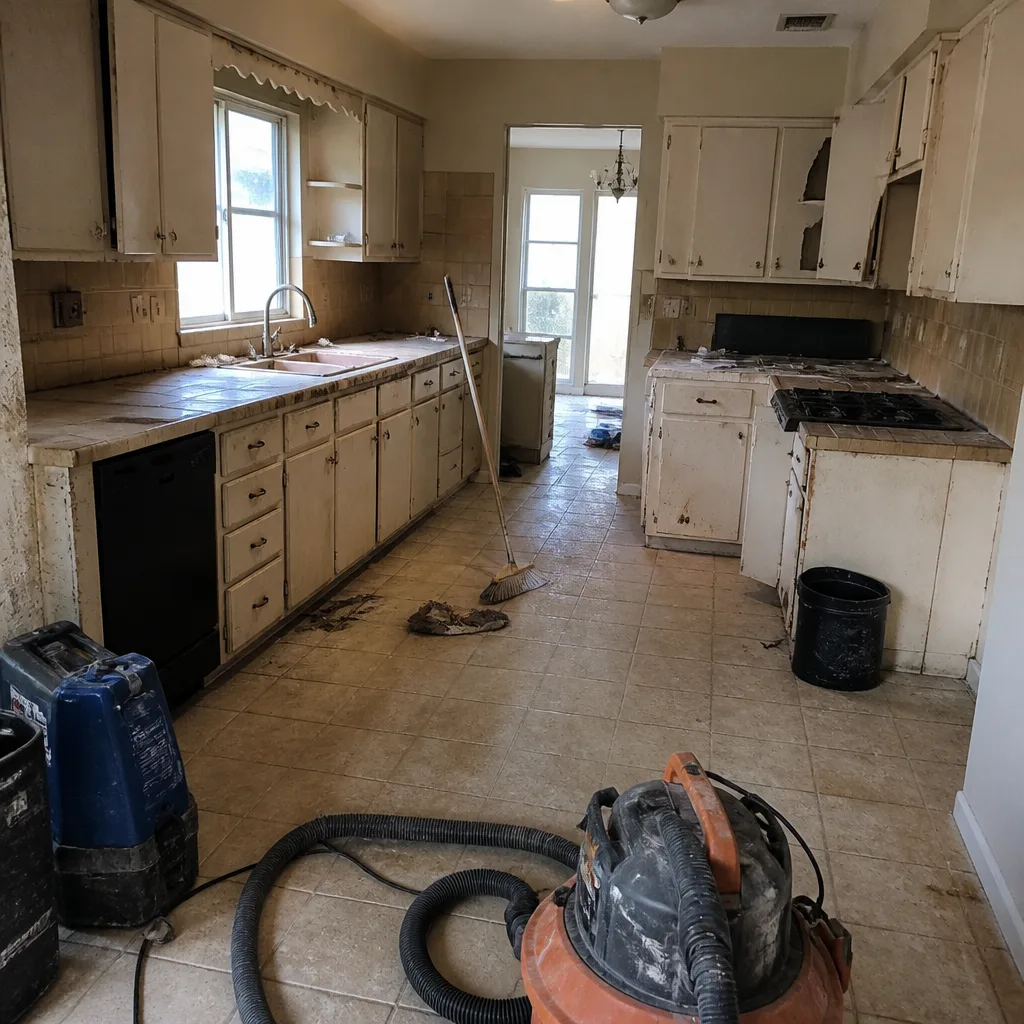 Before
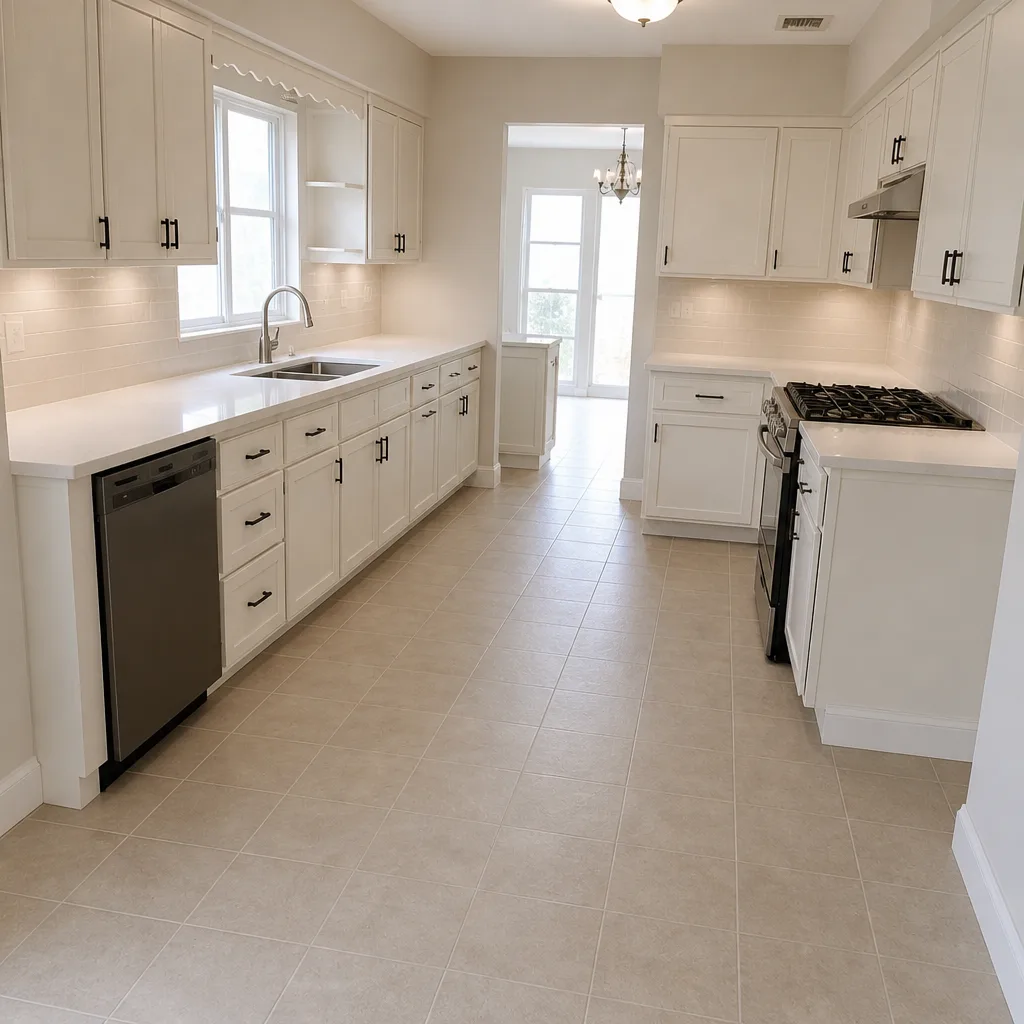 After
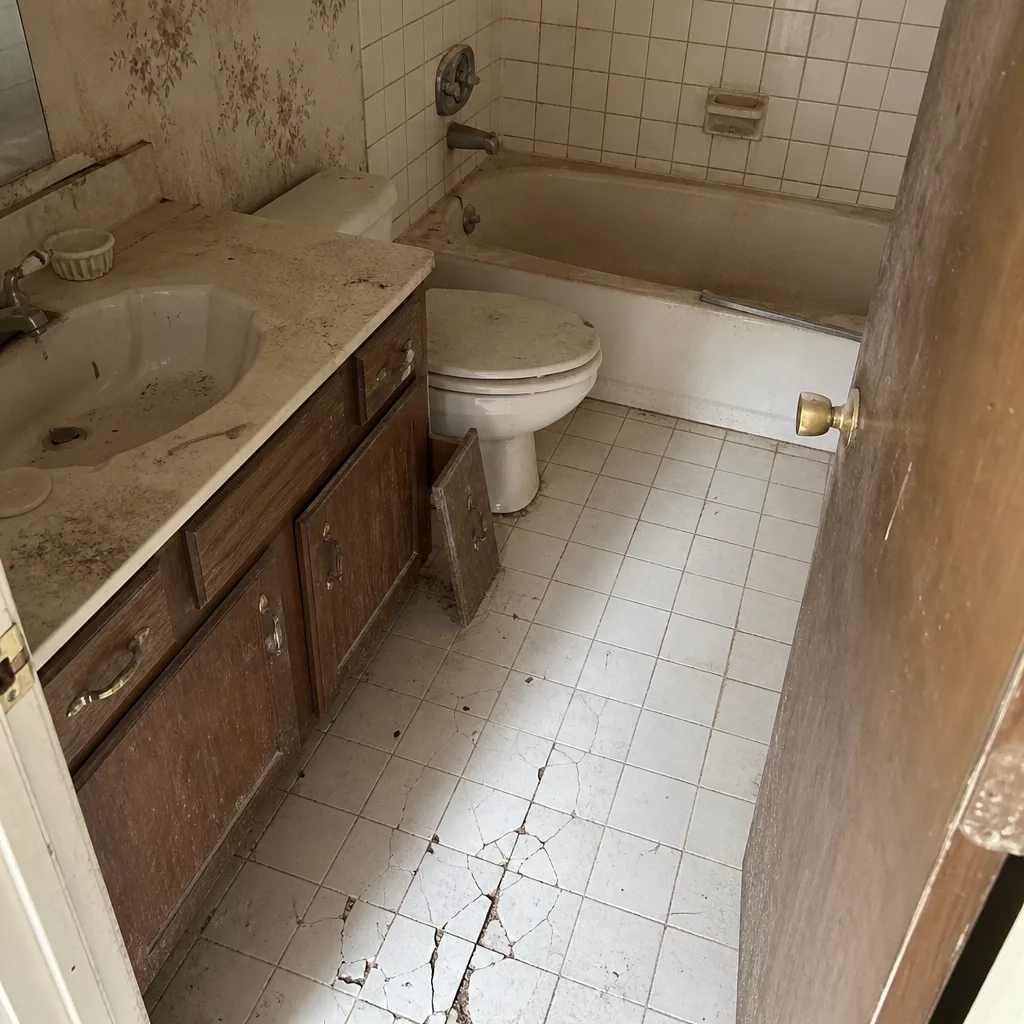 Before
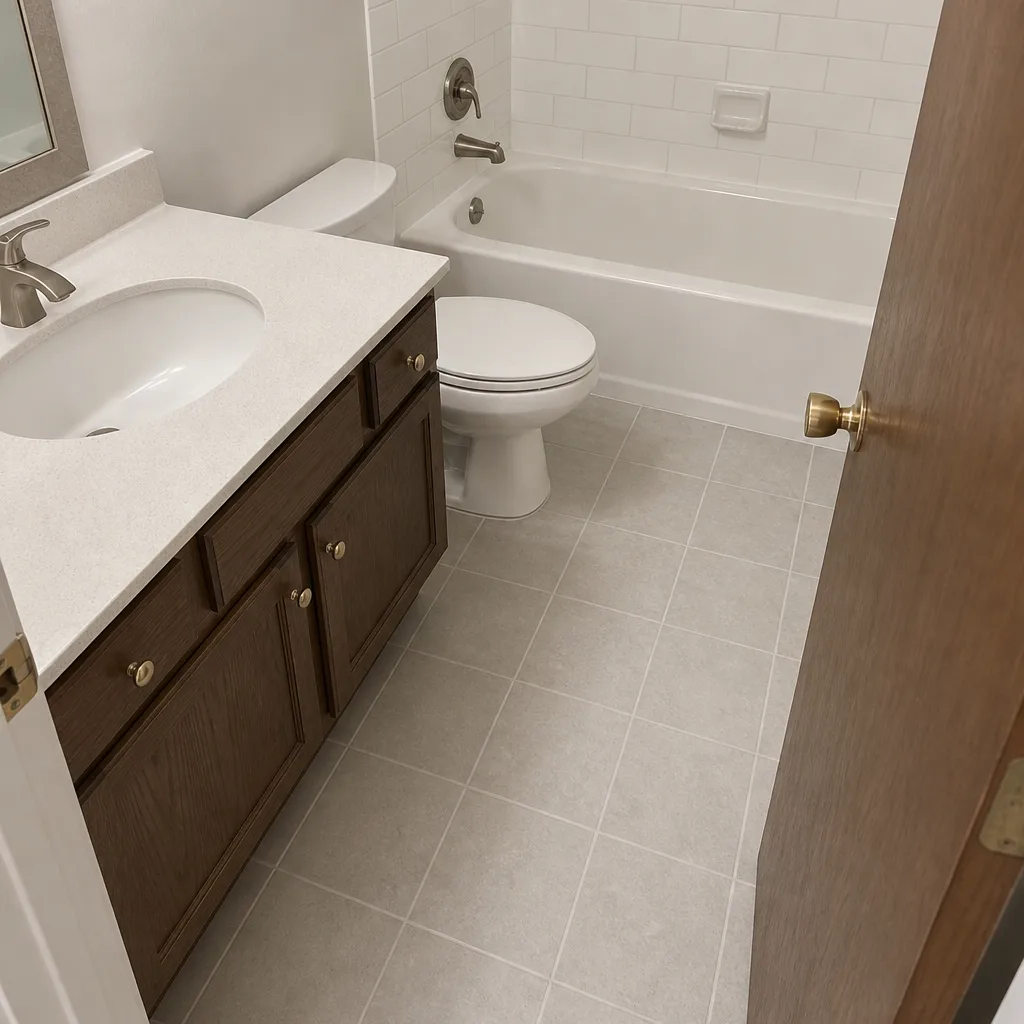 After
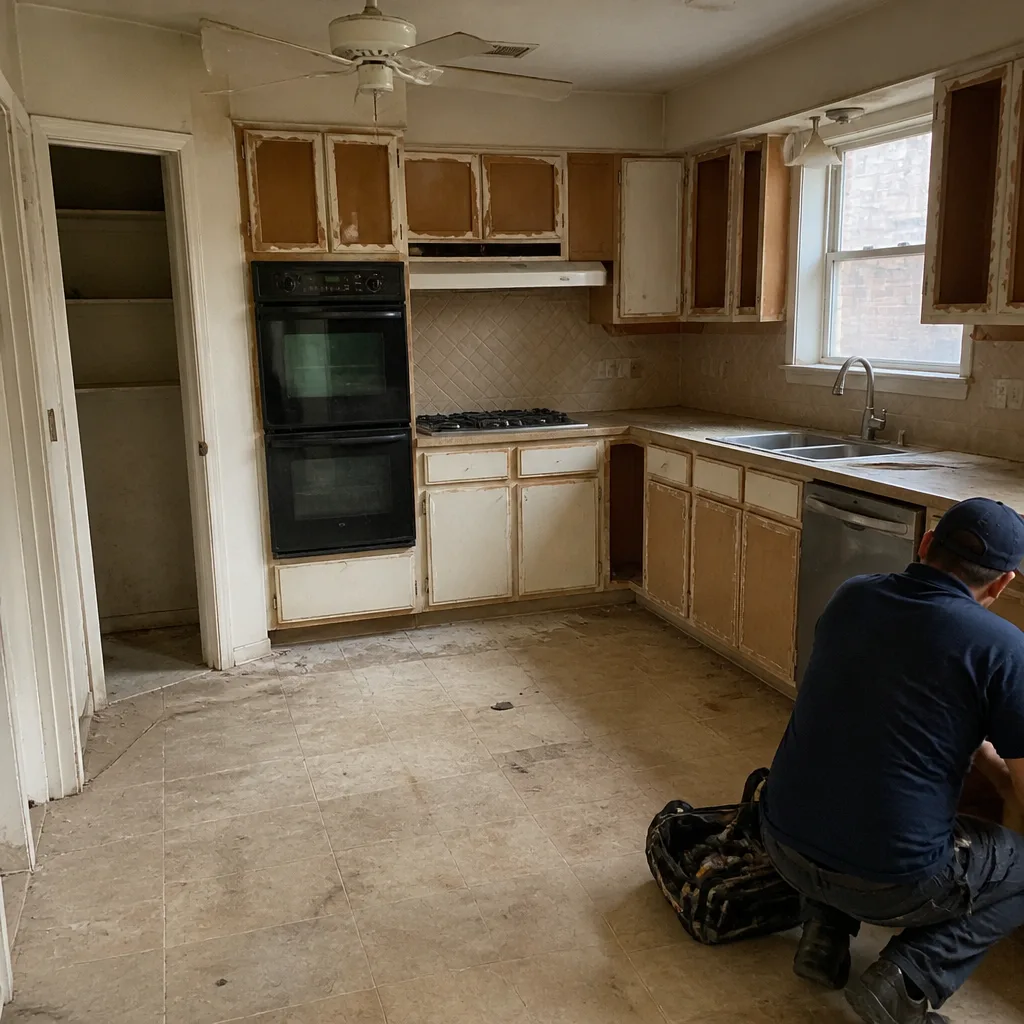 Before
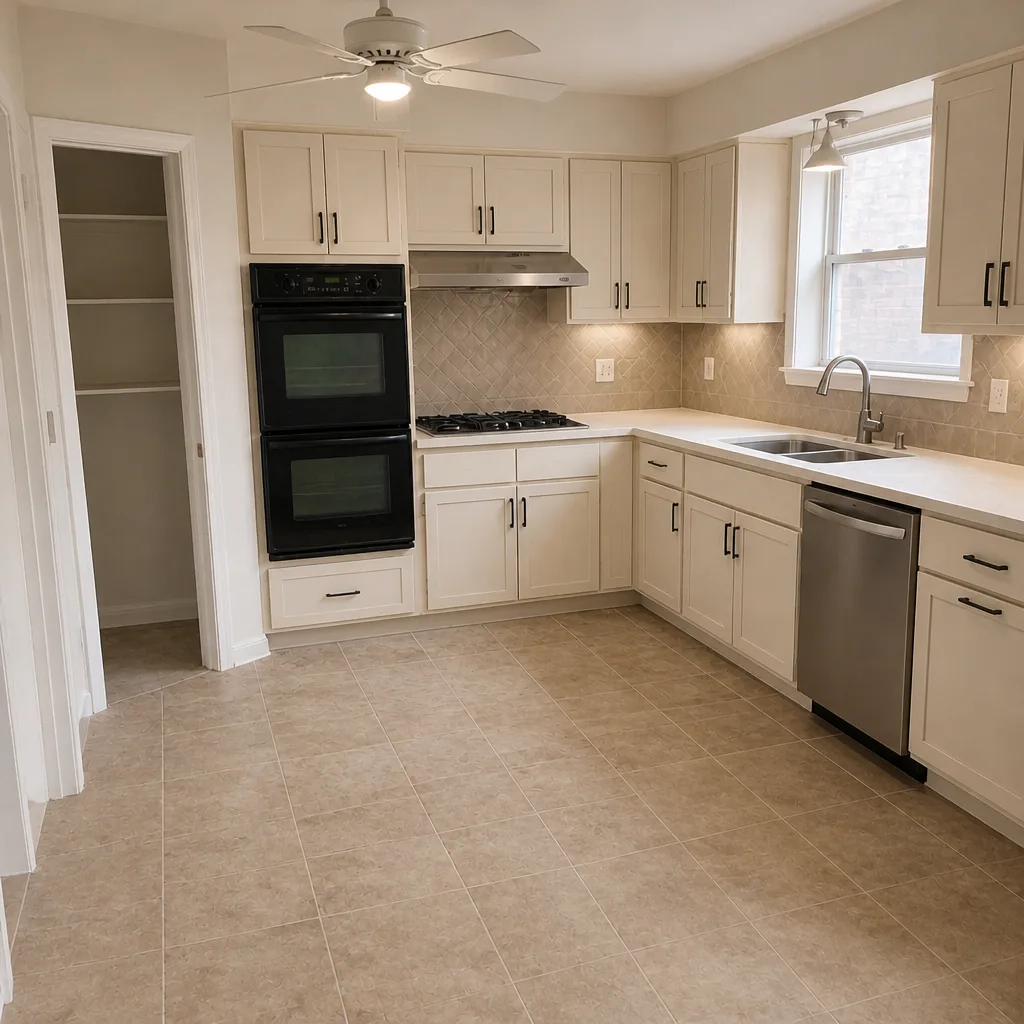 After
When to Call a Professional
Call a licensed tradesperson – not a general handyman – when any of these is true: water is showing on the opposite side of a shower wall, the floor near the shower gives underfoot, a GFCI won’t trip or reset, the attic shows staining or condensation above the bathroom, the drain gurgles or pools, or you’re on aluminum branch wiring and haven’t had it evaluated. Those conditions involve water behind a waterproofing membrane, a compromised liner, electrical fire risk, or venting that’s recirculating moisture. Each needs a licensed diagnosis and a documented fix.
Rowan Construction Group Plano offers free estimates in Plano – call (844) 761-8346. We’ll water-test the wet areas, follow the exhaust duct into the attic, and put the diagnosis and the price in writing before anyone starts. Bring a competitor’s estimate and we’ll review it line by line at no charge.
Frequently Asked Questions
Most mid-demo corrections in Plano run $350 to $2,200 per issue, while post-completion failures like a shower pan rebuild climb to $2,500 to $5,500. The exact number depends on how much tile has to come out and whether a licensed plumber or electrician is involved. Call (844) 761-8346 for an exact quote – estimates are free and documented.
Because the substrate is moving, not because the grout was bad. Cement board without proper backing, a missing uncoupling membrane over plywood, or a pan that wasn’t bedded correctly all cause flex that cracking grout reveals. The fix is a substrate repair with tile removed, not a regrout – regrouting a flexing shower fails again.
Usually not. A slow drain right after a remodel is typically a p-trap installed at the wrong slope (it needs 1/4 inch per foot toward the drain) or a drain body set at the wrong height relative to the finished tile. A licensed plumber can confirm the slope with a level on the trap arm before tile has to come up.
No. It must terminate outside through a roof or wall cap with a damper. Venting into the attic is a code violation in Plano and most of North Texas, and in our humid summers it condenses on the roof deck, saturates insulation, and grows mold above the ceiling.
Efflorescence is white, powdery, and crusty – it’s mineral salt pushed out by water evaporating behind the tile. Mold is typically darker, fuzzy, and grows on the surface. Efflorescence points to a waterproofing failure behind the tile, which is why it means the membrane needs inspection, not more sealer.
Yes, especially on mid-demo discoveries where a contractor says rot, wiring, or plumbing needs replacing. A second opinion should verify the condition and the line-item price before you sign. Rowan compares any written estimate line by line at no charge – call (844) 761-8346 to set it up.
The Bottom Line

Bathroom remodeling problems have predictable signatures. Cracked grout in the same lines means substrate flex; white bloom through grout means water behind tile; soft floor at the threshold means liner failure. Mid-demo discoveries follow the age of the house: galvanized lines before 1970, cast iron drains before 1980, aluminum wiring in the 1960s and 70s. A slow drain in a new shower means the p-trap slope or drain height is wrong. An exhaust fan that ends in the attic means mold above your ceiling. Diagnose before you spend, get the fix in writing with a line item and a signed change order, and verify the che
Written by the team at Rowan Construction Group Plano.