Last updated November 18, 2026




Free written scope consultation - allowances, timeline, and change-order rules on paper before a single trade is scheduled
Bathroom Remodeling Warning Signs Every Homeowner Should Know
Here’s the uncomfortable truth about hiring a bathroom remodeler: the signs that predict a bad job rarely show up in the sales pitch. They hide in the paperwork nobody asks for, in what the bid leaves out, and in what the demolition reveals. In Texas, workers’ comp coverage is optional for employers, and a contractor who can’t produce a certificate of insurance for general liability and workers’ comp within 24 hours of being asked is a contractor whose job-site injury can become your claim. We’ve walked into Plano bathrooms where the warning signs were visible on day one and ignored. This guide teaches you to audit the documents and the job site before a single tile is set.
Quick Answer
The biggest bathroom remodeling warning signs are missing or vague paperwork, not bad manners. Request proof of general liability and workers’ comp insurance, verify the plumbing and electrical licenses yourself, and read the bid for what’s absent: square footage, brand names, and a waterproofing membrane listed as its own line. If the bid says “tile allowance” with no number attached, or the contractor says “we’ll figure it out as we go,” those are decision points you should act on before signing.
Styles & brands we work with
- Kitchen remodeling
- Bathroom remodeling
- Home additions & ADU
- Roofing
- Windows & doors
- Driveway & pavers
- Fence
Table of Contents
- The Documents to Request Before You Sign Anything
- How to Verify a Plano Contractor’s Licenses and Permits
- Bid Red Flags That Signal Low-Quality Substitutions
- Job-Site Red Flags During Demolition
- What “We’ll Figure It Out as We Go” Actually Signals
- How to Read a Plano Permit Record Online
- Common Mistakes to Avoid
- Frequently Asked Questions
The Documents to Request Before You Sign Anything
A bathroom remodel is a paperwork project before it’s a construction project. The contractor who hesitates when you ask for documentation is telling you something. Ask for these three things early, ideally before the in-person estimate, and watch how fast they arrive.
- A certificate of insurance (COI) showing general liability coverage, with you named as an additional insured for the duration of the project. This is the document that keeps a ladder fall off your homeowner’s policy. If your contractor can’t add you as an additional insured, ask why.
- Proof of workers’ comp, or a written statement that the company is not a subscriber. Texas does not require most employers to carry workers’ comp, so a contractor without it means an injured worker may look to your homeowner’s coverage for medical bills. Ask directly and get the answer in writing.
- A written lien waiver policy. In Texas, unpaid material suppliers and subcontractors can file a mechanic’s lien against your property even if you already paid the general contractor in full. A reputable contractor collects signed lien waivers from subs and suppliers at each draw. Ask how they handle it and get the process described in writing.
None of those three requests should cause friction. A company that operates on documented records hands them over without drama. The contractor who says “we’ve never had anyone ask for that” has just answered your question.
How to Verify a Plano Contractor’s Licenses and Permits
Texas does not license general contractors statewide, which catches homeowners off guard. What the state does license is the work that carries real risk inside a bathroom: plumbing and electrical. Verify both at the Texas Department of Licensing and Regulation (TDLR) before you sign, regardless of what the bid packet claims.
- Electrical: Plano requires a permit for any bathroom electrical work, and Texas requires a licensed electrician for the work itself. Search the electrician’s license number on the TDLR site. A number that doesn’t return a match is a stop sign, not a typo.
- Plumbing: Any change to supply or drain lines requires a licensed plumber and a separate plumbing permit in Plano, inspected by the city. Moving a shower valve or relocating a drain without a permit means an unpermitted line behind the tile, and that line belongs to you at resale.
- Contractor registration: Verify the company is registered to do business in Texas through the Secretary of State business search, and confirm the exact legal entity name matches the name on your contract.
When we scope a Plano bathroom, we know which permits the city will pull and how long inspection scheduling typically takes. That detail belongs in the written scope, not spoken at the sales appointment. If your contractor can’t say which permits your project needs, they haven’t done enough bathrooms in Plano to know.
Bid Red Flags That Signal Low-Quality Substitutions
The estimate is the most important document in the deal, and most homeowners read it like a receipt instead of a contract. A low bid usually isn’t a discount; it’s a substitution list written in vague language. Read the bid for what’s missing as carefully as what’s there.
Three bid red flags to audit line by line
- Vague allowances. A line item that says “tile allowance: $1,200” without square footage is not a price, it’s a trapdoor. Ask for square footage, the per-square-foot rate, and the brand and model of the tile that amount actually buys. A real bid names the material.
- No brand names anywhere. A professional bid names Kohler or Toto for the fixture, Cambria or Caesarstone for the vanity top if stone is involved. If the estimate lists no brand at all, you’re buying a commodity the contractor will source at whatever price leaves the most margin.
- No waterproofing membrane as a separate line. Tile is not waterproof. A wet-area floor and shower wall must sit over a bonded membrane, and that membrane is a distinct product that costs real money. If it isn’t a line item on the bid, it may not be on the wall either.
One line we always look for: substrate preparation. A crooked subfloor or rotted joist at the tub surround isn’t a surprise to a contractor who has done this 100 times; it’s a known cost. Reputable contractors price unknowns with a contingency line item rather than a verbal “we’ll see what’s under there.”
Job-Site Red Flags During Demolition
Once the tile comes off, the previous remodel becomes visible, and that’s where a lot of Plano homeowners get their real answer about a contractor. Demolition is diagnostic. Here’s what to watch for in the first two days.
- Notched joists. A plumber or electrician who cut a deep notch through a floor joist to run a drain weakened the structure, and you can see it the moment the subfloor is exposed. Ask how the contractor will address it, then demand the answer in writing.
- Wire splices inside walls. A splice buried inside a wall without a junction box is a fire hazard hidden behind drywall. Your electrician should identify any you find and either remove them or bring the circuit up to code with a permit.
- Unpermitted plumbing changes. A shower valve that doesn’t match the fixture rough-in, a drain line rerouted with no permit sticker on the wall, a water heater vented into the attic. All of these mean the previous work was undocumented, and if it’s now your project’s starting point, the scope just changed.
- Missing waterproofing under an old tile shower. If the old shower had no membrane and no cement board, you’re pulling out wet framing, not just tile. In our experience, Plano bathrooms built before the 2010s frequently turn up this exact problem in the primary bath.
What matters most after demolition is how the contractor documents what they found. The move that separates a good job is a written condition report: photos of the notched joist, the boxed-and-spliced wire, the missing membrane, plus a line-item change order before anything new goes back in. If your contractor shrugs and says “we’ll take care of it,” ask for the paperwork. A photo record isn’t a nice-to-have; on a Plano bathroom where you can’t see behind the wall, it’s the whole evidence trail.
What “We’ll Figure It Out as We Go” Actually Signals
If your contractor responds to a scoping question with “we’ll figure it out,” you’ve just learned that the price can move. In a bathroom, the unknowns are real and common: concealed water damage under the tub, joists that need sistering, a shower valve that has to move. A professional contractor doesn’t pretend those risks don’t exist. They budget for them.
Here’s how to spot the difference. A reputable bid handles unknowns with a contingency line item that is agreed before the work starts and drawn on only if the discovery is documented. A vague contractor keeps the entire unknown open, then sells the price with enthusiasm and delivers a surprise invoice after the drywall is back up.
How to benchmark contingency and change orders
- Ask: “What’s the contingency amount in this bid, and how is it drawn on?” If the answer is a number, that’s a written process. If the answer is a feeling, that’s an open tab.
- Ask: “What happens if you find rotted subfloor during demo?” A good answer describes the documented condition, a change order, a signature, and only then the work.
- Ask: “When do I sign something before a change adds to the bill?” The answer should be: before anyone touches the affected area. Nothing proceeds on a change until a written change order is signed. Under our own Haven Standard, that’s a clause, not a slogan.
No work proceeds on a change until the change order is signed. That single discipline is why we can tell a client their final number will stay within a few percent of the agreed price. If your contractor can’t say the same, it’s because their process doesn’t guarantee it.
How to Read a Plano Permit Record Online
One of the most useful pre-hire checks costs nothing and takes 10 minutes. Plano’s city permit system is searchable online by property address and by contractor. Before you hire, pull the records for your address and the contractor’s name. This reveals a contractor’s history the sales pitch can’t rewrite.
What to look for in the record
- Closed versus open permits. A contractor’s track record of closed permits with passed inspections is real evidence that their work was inspected and signed off by the city. A pattern of open permits, or expired permits, tells you they ran out of steam before the inspection stage.
- Your address’s own history. If your house has an open permit from a prior remodel, that’s information you need before your project starts. An unpermitted, unclosed permit can hold up your sale years later.
- Final inspection dates. A permit that has a final inspection with a “passed” result is the strongest document in the folder. Ask your contractor for the final inspection on their last three Plano bathroom jobs.
This is exactly the kind of check that separates a documented contractor from a well-reviewed one. Plano homeowners who read three-star reviews already know that reviews are opinions. Permit records are facts. A bid from a contractor with a clean record of passed inspections is a shorter list than you might think.
Common Mistakes to Avoid
- Hiring on the pitch and never asking for the COI. The certificate of insurance names you as additional insured, and if you never ask for it, you never have it. The claim that lands on your homeowner’s policy is one the contractor should have carried.
- Reading only the top-line number. A bid with a $14,800 total and no square footage, no brand names, and no membrane line is not a cheaper bathroom; it’s a smaller scope with a bigger risk. Read the line items, not the sum.
- Skipping the TDLR verification because the contractor “has a guy.” Texas licenses plumbers and electricians, and the license number on the paperwork is verifiable in a search. A contractor who can’t produce a verifiable license number is offering a guy, not a plumber.
- Accepting verbal change orders. A change agreed out loud is a change with no documentation, and the invoice arrives later. Every scope change in a Plano bathroom needs a signed change order, including the “small” ones.
- Assuming workers’ comp is required. It isn’t in Texas for most employers. Ask the question, get the written answer, and know exactly which insurance covers the worker who gets hurt in your bathroom.
- Not pulling the permit record for your own address. A prior remodel with an open permit is your problem, not your predecessor’s, and you find out when you list the house.
See the difference
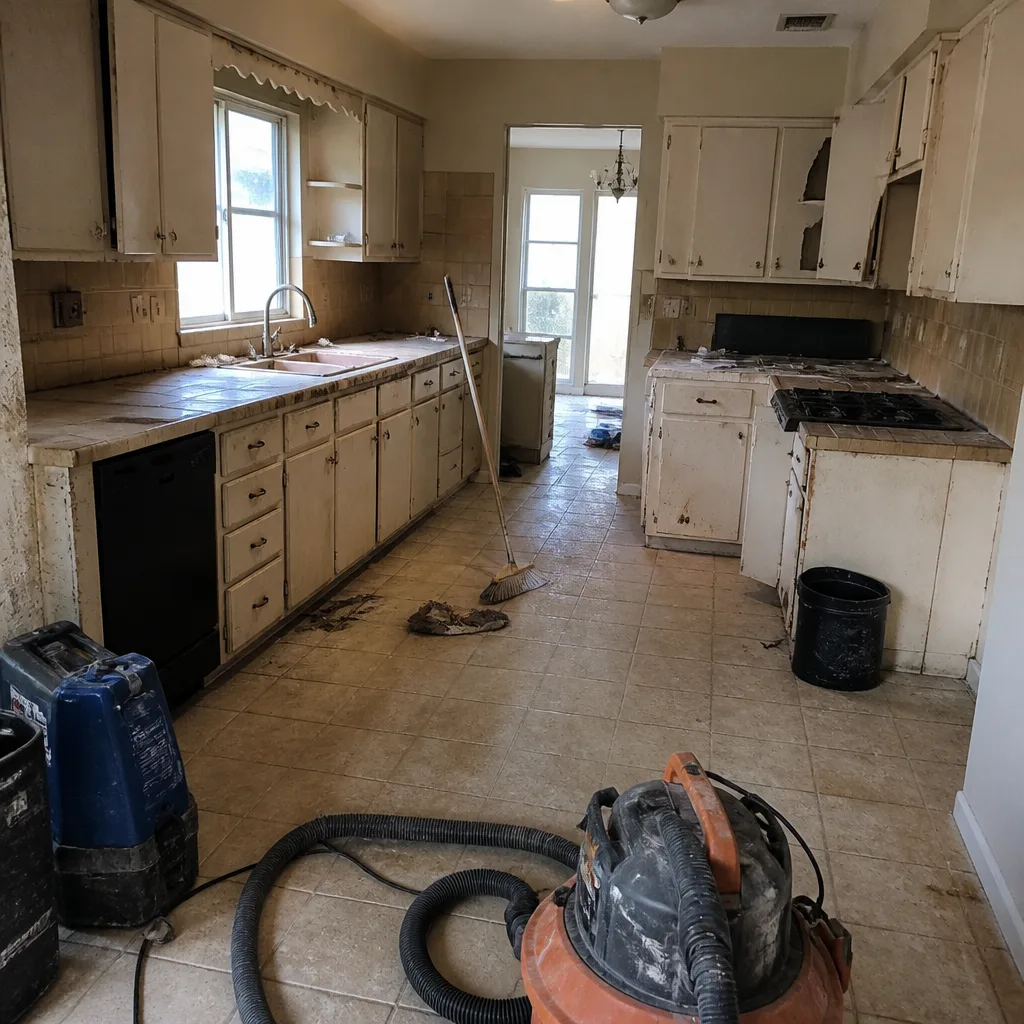 Before
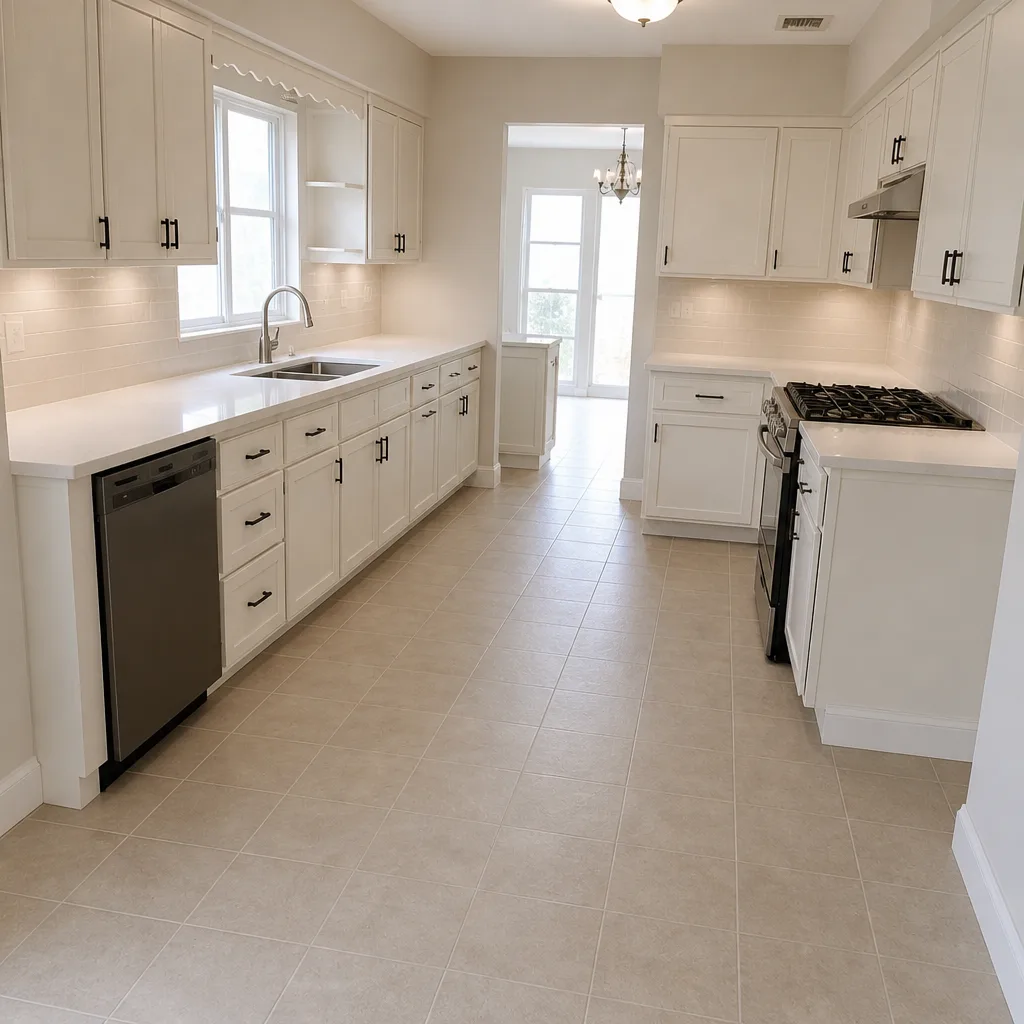 After
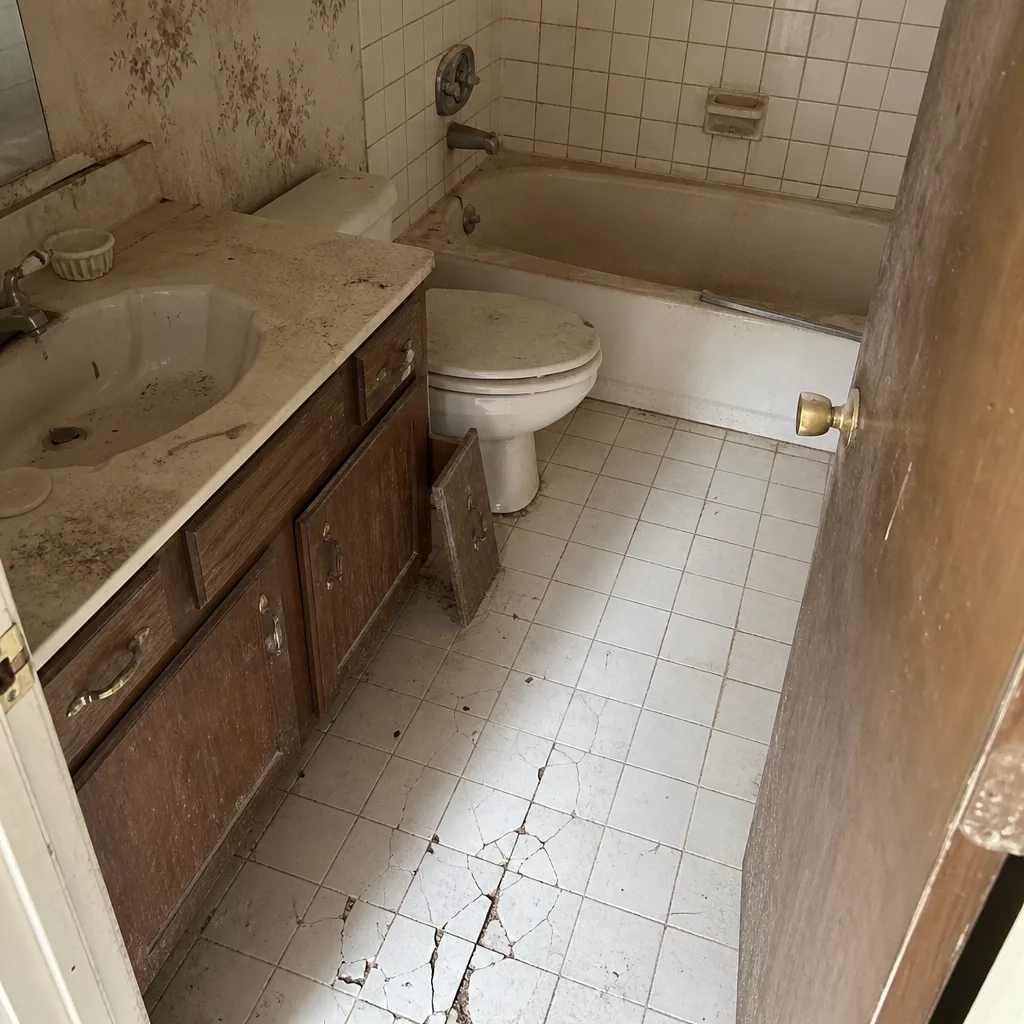 Before
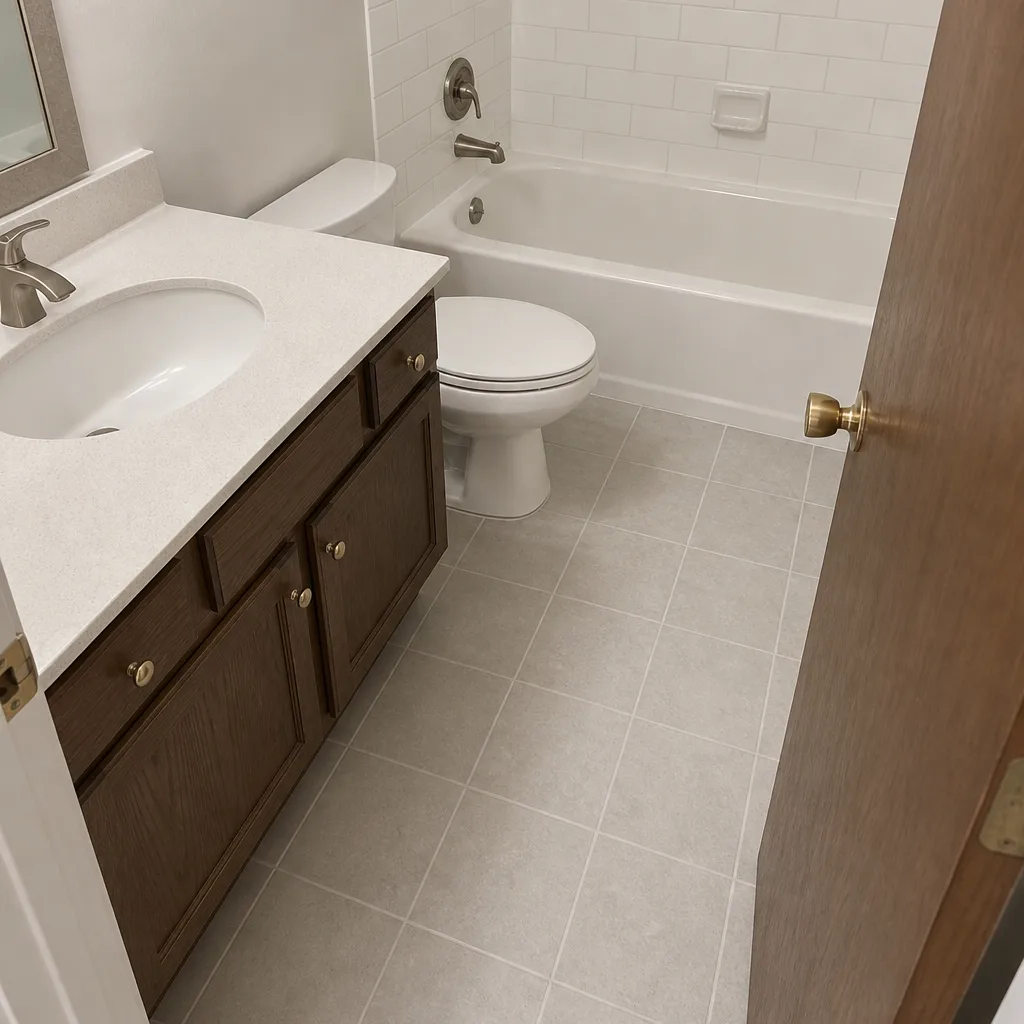 After
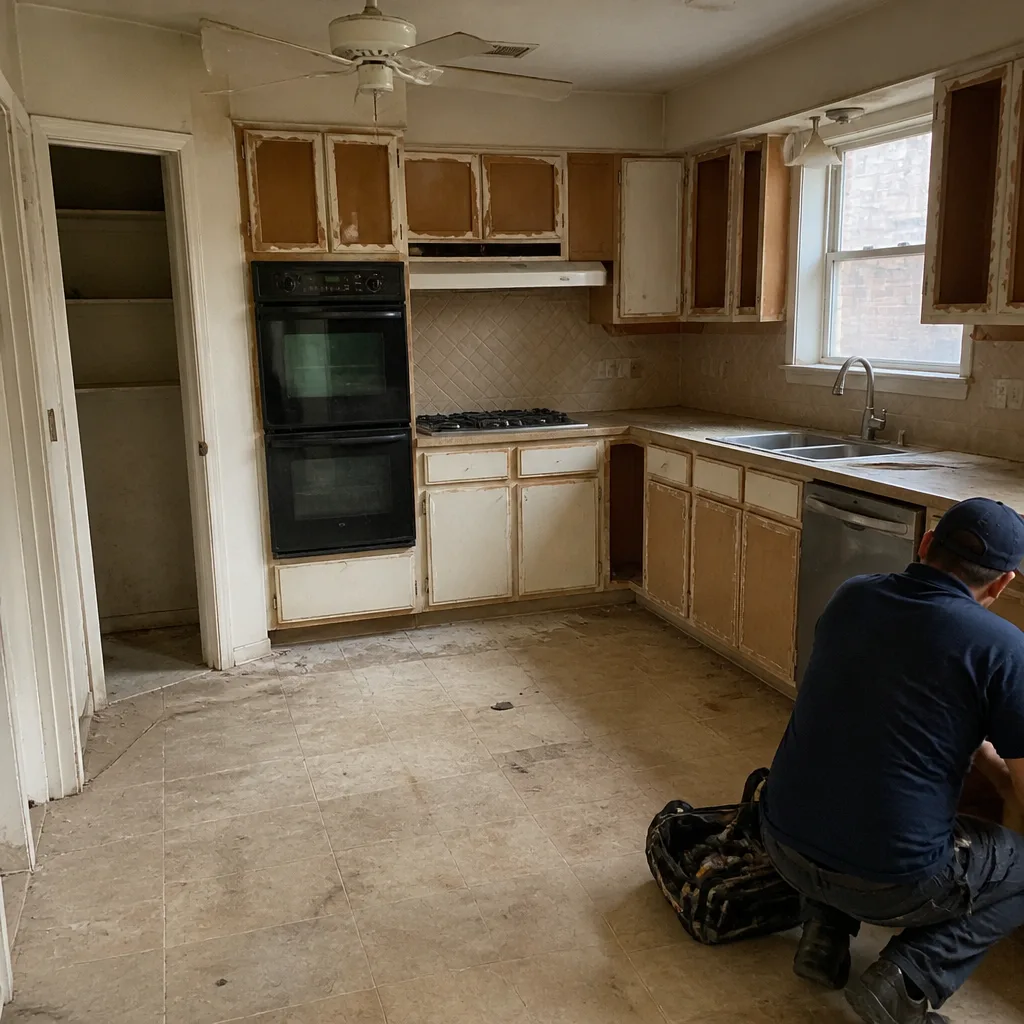 Before
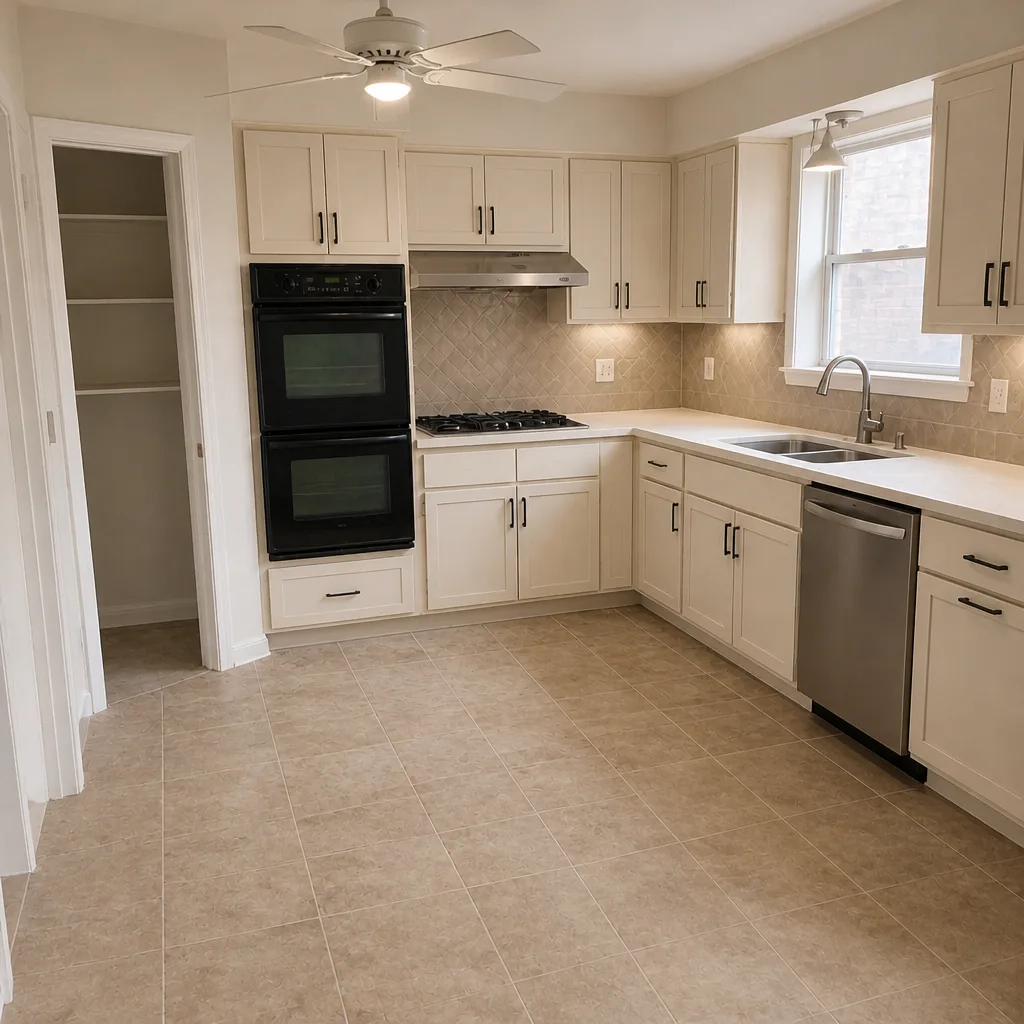 After
When to Call a Professional
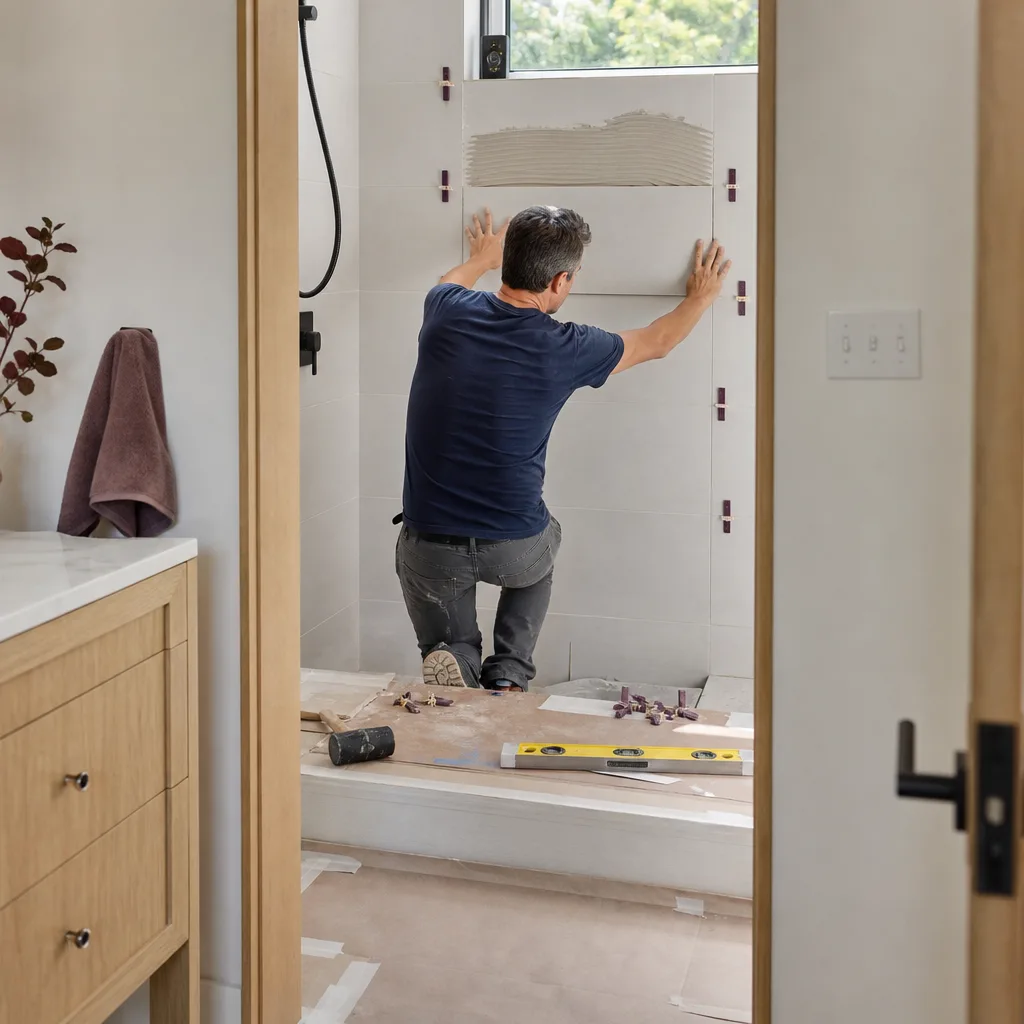
Some of these checks you can do yourself: pull the COI, verify the license, search the permit record. But once the demolition reveals notched joists, wire splices inside walls, or a missing waterproofing membrane, the scoping decision changes from paperwork to construction. That’s the moment to bring in a contractor who writes the condition into a line item and quotes it. We’ve seen the whole range in Plano bathrooms, and the jobs that finish clean are the ones where the contractor priced the unknowns before they were found. Rowan Construction Group Plano offers free estimates in Plano, plus a free second opinion on any written estimate you’ve already received: call (844) 761-8346. Bring the competitor’s bid and we’ll review it line by line at no cost, so the number on the page matches the number you actually pay.
Frequently Asked Questions
Ask for a certificate of insurance showing general liability coverage with you named as additional insured, plus written confirmation of workers’ comp status. Texas makes workers’ comp optional for most employers, so a contractor without it can leave an injured worker’s medical bills on your homeowner’s policy. Get both answers in writing before signing anything.
Any plumbing or electrical change in a bathroom requires a permit in Plano, including moving a shower valve, relocating a drain, or adding a dedicated circuit. Cosmetic work like paint and tile replacement generally does not. Ask your contractor which permits they’ll pull before you hire; a professional names them without hesitation.
A low bathroom bid typically omits square footage on tile allowances, brand names on fixtures, and the waterproofing membrane as a separate line. Those three omissions hide the real cost, and the money shows up after signing. If the bid doesn’t name the brand and the material quantity, the number is not a price.
It usually means the price is undetermined and change orders will arrive after the drywall goes up. A professional bid handles unknowns with a written contingency line item and a signed change order for anything found during demolition. Ask for the contingency amount; if there isn’t one, the contractor is pricing by feel.
Yes. Unpermitted prior work is common in Plano bathrooms from earlier remodels, and it’s usually fixable: bring the electrical and plumbing up to code with proper permits and inspections, correct structural issues like notched joists, and get the work documented. The cost depends on what the demolition reveals, so get a written scope before work starts.
Search Plano’s online permit system by property address and by contractor name, then look at whether permits are closed with passed final inspections or left open. A clean record of closed permits with passed inspections is verifiable evidence of quality, and a pattern of open permits is a warning sign. Ask the contractor for the final inspection records on their last three jobs.
The Bottom Line
The warning signs that predict a bathroom job gone wrong live in the documents: a missing COI, an unverified license, a bid with no square footage or brand names, a contractor who treats change orders as a verbal courtesy. Audit those first, and the job-site problems during demolition become manageable instead of catastrophic. A written price before work starts, a signed change order for every shift, and a documented photo record are the three documents that do the work. That’s the standard we hold in Plano, and it’s why we offer the 365-Day Done Right Promise. Call (844) 761-8346 for a free estimate, or check our Rowan Construction Group Plano home page to see the rest of what we do, including Home Additions & ADU in Plano, Driveway & Pavers in Plano, and Fence Installation in Plano.
Written by the team at Rowan Construction Group Plano.