Last updated November 18, 2026

Free written scope consultation - allowances, timeline, and change-order rules on paper before a single trade is scheduled
Driveway & Pavers Maintenance Schedule: What to Do and When
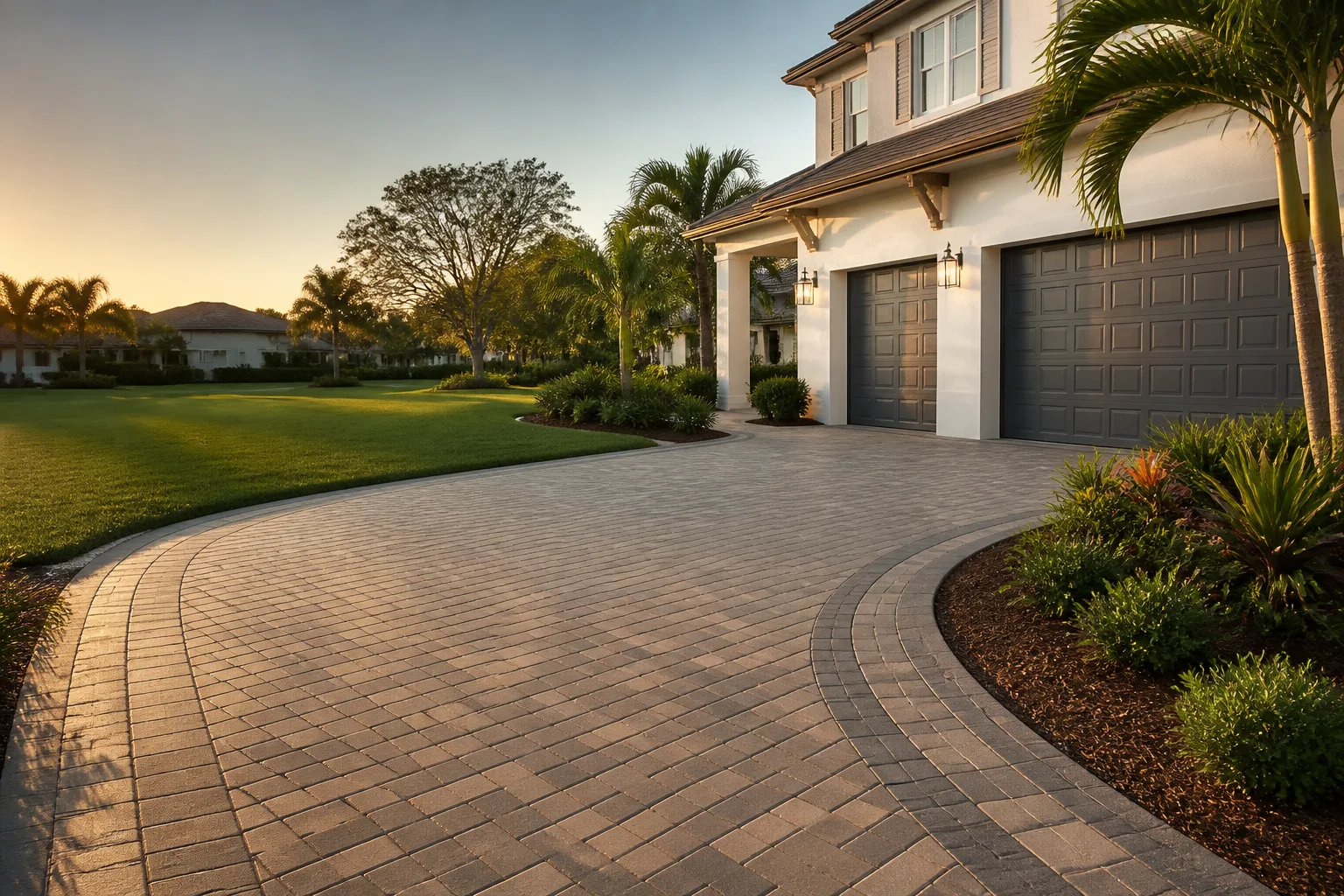
October is the single highest-value maintenance month for a paver driveway in Plano. Re-sanding the joints before the winter freeze cycle costs under $80 in materials and prevents the most common spring repair call we see: washed-out joints, shifted pavers, and rutted edges after a February ice event. Skip that one task and the rest of the year gets expensive.
A paver driveway in North Texas needs four specific interventions per year, not a generic seasonal checklist copied from a climate that doesn’t exist here. Miss any one of them and you compress a 30-year surface into fewer than 15. This guide lays out the month-by-month calendar we use in Plano, the products that won’t void your warranty, the one measurement that predicts your next 18 months of cost, and how to keep a maintenance log that holds up at resale.
Styles & brands we work with
- Kitchen remodeling
- Bathroom remodeling
- Home additions & ADU
- Roofing
- Windows & doors
- Driveway & pavers
- Fence
Quick Answer
In Plano, a paver driveway needs four touchpoints a year: a spring joint inspection and top-up after the freeze cycle (March), a pollen and efflorescence clean in April, a deep joint-sand refill and optional penetrating sealer in October, and a mid-summer weed and edge check in July. Re-sand in October, not spring: sanding before the first freeze is what protects the joints through the December – February freeze-thaw that does the most damage to clay soil here.
Table of Contents
- Why Plano Weather Breaks a Generic Maintenance Schedule
- The Month-by-Month Paver Calendar for North Texas
- How to Inspect and Document Joint Sand Depth
- Cleaning Products That Are Safe on Plano Pavers
- Sealing: When It Adds Value and When It Traps Moisture
- Building a One-Page Maintenance Log for Warranty and Resale
- Common Mistakes to Avoid
- When to Call a Professional
- Frequently Asked Questions
- The Bottom Line
Why Plano Weather Breaks a Generic Maintenance Schedule
Most maintenance advice you’ll find online assumes a mild coastal climate or a deep-freeze northern one. Plano is neither. The city sits on the Blackland Prairie, and the soil under most of West Plano, Willow Bend, and the older neighborhoods near downtown is expansive clay that swells when wet and shrinks hard when dry. That movement is what a paver driveway has to survive, and it’s the reason a schedule built for a stable sub-base fails here.
The climate swings harder than the averages suggest. A January week can run 70°F and drop to the teens within four days. That fourth-generation freeze-thaw cycle opens joints, lifts edging, and pushes sand out of the gaps faster than one long cold spell would. Then March brings oak pollen, thick enough to stain light-colored pavers a dull yellow-brown if it sits. By June the UV index is regularly 10 or 11, and a film-forming sealer left too thick will blister and trap moisture underneath. October flips it back: cooler, dry, and the ideal window to re-sand before the cycle repeats.
The catalog also matters. We install Belgard and Techo-Bloc pavers because their density and joint tolerances hold up to this specific tug-of-war between clay soil and hard summer heat. If your driveway is concrete, the schedule is different and simpler; that’s a separate conversation, and you can read more on our Driveway & Pavers in Plano page. For pavers, the four-intervention calendar below is the baseline.
The Month-by-Month Paver Calendar for North Texas
Here is the schedule we hand to Plano homeowners after an install. It’s built around the freeze cycle, the pollen season, and the peak heat window rather than the four seasons printed on a bag of sand.
- February (late): Walk the perimeter and flag any paver that has rocked or lifted through the freeze-thaw. Don’t fix it yet. Note it so you can address it when the ground stabilizes in March.
- March: Post-freeze joint inspection. Top up sand in any joint where depth has dropped below half the paver thickness. This is the first big line item of the year.
- April: Oak pollen and efflorescence clean. Pollen sits for two to three weeks in Plano. Efflorescence, the white chalky bloom on gray pavers, shows up on the north-facing and shaded sections as the soil dries.
- June: Edge restraint check before the ground bakes hard. Confirm the edge is anchored and no pavers have crept outward toward the curb.
- July: Weed and vegetation pull. The peak heat window dries the surface fast and any spurge or purslane sprouting in the joints is easy to remove before it roots deep.
- October: The main event. Full joint sand refill, and if you seal, this is the window. Soil and air are dry and the surface will accept a penetrating sealer before the first freeze.
- December: Pre-freeze visual. One pass, ten minutes. Confirm no new gaps and that the drainage channel by the garage apron still runs clear.
That’s four substantive interventions and three quick checks. A paver driveway installed in Plano in 2018 and held to that schedule routinely looks the same in year eight as it did in year two. Skip the October re-sand for two consecutive years and the joints open, sand washes out in a single heavy rain, and the pavers begin to rock in the clay. Once pavers rock, the base layer under them has started to fail, and the repair jumps from a bag of sand to resetting whole sections.
How to Inspect and Document Joint Sand Depth
Joint sand depth is the one measurement that tells you what the next 18 months of your driveway will cost. When the sand layer between pavers drops below a half-inch, the pavers lose their lateral support, and the first hard rain loosens everything around them. It predicts the next failure better than anything else you can check.
Here’s how to take the measurement with no special tools:
- Pick a joint in each of four zones: one near the garage door, one at the driveway midpoint, one at the curb apron, and one on the north-facing side where moisture lingers.
- Push a thin wooden dowel or a zip tie into the joint until it meets firm resistance. Mark the depth with your fingernail.
- Measure the marked length against a ruler. Record the number, the zone, and the date in your log.
- Compare against paver thickness. A 2-3/8-inch paver shouldn’t have joint sand sitting more than 3/8 inch below the surface. If it’s down to a quarter inch, top up.
- Note the joint width alongside the depth. A joint that reads 1/8 inch instead of 1/4 inch means pavers have crept and the edge restraint needs a look.
Might sand still work for these joints if the local stock is unavailable, but in Plano we use polymeric sand for driveways where foot traffic and vehicle loads are heavy. Polymeric sand sets harder after wetting and resists the wash-out we see in traditional sand after a July storm. If you’re already overdue, you can read more about the repair side on our Rowan Construction Group Plano home page. The key is to record the number rather than guess, because a log with two years of depth readings turns a vague worry into a clear decision.
Cleaning Products That Are Safe on Plano Pavers
Most paver warranty claims we review are voided by the wrong cleaner, not by the pavers themselves. The safest rule: pH-neutral first, targeted products only for a specific stain, and never acid unless the manufacturer names it.
- Routine pollen and dirt (April, July): A pH-neutral paver cleaner at the label dilution rate – typically 1 part concentrate to 4-8 parts water, and follow the container, not this article. A low-pressure rinse, under 1,200 PSI, with a fan tip held at least 12 inches off the surface. High-pressure on a wide nozzle erodes the joint sand.
- Efflorescence (the white bloom): A dedicated efflorescence remover based on sulfamic acid, diluted exactly per the label, applied sparingly and scrubbed with a soft brush, then flooded off. Never let acid dry on the surface. Never use muriatic acid on sealed pavers.
- Oak pollen stains (April): A mild oxygen-based cleaner at label dilution is usually enough. Stronger solvent cleaners can dull lighter pavers and are rarely needed if pollen is cleaned within two weeks.
- Motor oil and rust (any month): A poultice made from an absorbent powder and water, left 24 hours, then lifted. Cleaners with a pH above 10 can leave a permanent film on sealed pavers.
Before any cleaner goes on, test it on an unobtrusive corner and wait 24 hours. Then read the warranty language from the paver manufacturer: Belgard and Techo-Bloc both spell out what voids coverage, and it isn’t always the same across product lines. We keep the manufacturer’s cleaning sheet with every install and hand a copy to the homeowner, which is a cheap way to save a claim later.
Sealing: When It Adds Value and When It Traps Moisture
Sealing is the most misused step in a Plano paver schedule. Done right, it slows stain absorption and reduces the erosion of joint sand over the winter. Done wrong, it traps moisture in the paver and pushes spalling – the flaking of the paver surface – through a hot Texas summer.
Two sealer types matter here:
- Penetrating sealer: Soaks into the paver matrix, leaves no visible film, and lets the paver vapor-breathe. Best fit for Plano’s swings because it doesn’t trap moisture. Reapply when water stops beading, usually every 24 to 36 months depending on traffic and sun exposure.
- Film-forming sealer: A visible top coat that darkens pavers and provides strong stain resistance. Only works if the surface is dry and temperatures are stable for 48 hours. In North Texas summer, a film-forming sealer applied too thick or applied over a damp paver will haze and lift within 12 months.
Want a second opinion before you seal? That’s a good use of our free second opinion on any written estimate – bring an offer you’ve been given and we’ll review it line by line at no charge. If the offering is “seal every year,” that’s an automatic flag. Penetrating sealer at 24-36 months is a sane schedule in Plano. If the offering is a film-forming sealer on a north-facing driveway with tucked shade, the schedule should include extra dry time or skip the film. The one rule: never seal a paver that isn’t fully dry and never seal within 90 days of installation. Fresh pavers release moisture and need to settle first.
Sealing adds the most value on driveways that see road salt or heavy traffic and less on a shaded, low-use driveway. On the shaded ones, sealing risks more than it protects, and the October window that would otherwise be the re-sand job should just be re-sand.
Building a One-Page Maintenance Log for Warranty and Resale
A maintenance log is the single most overlooked document a homeowner can keep. It supports a workmanship warranty claim, evidence for an insurance claim after a storm, and a resale file that reassures a buyer that the driveway was looked after. Here’s the one-page format we suggest.
- Header: Address, install date, paver brand and line (Belgard, Techo-Bloc, etc.), and the warranty terms with the written warranty document attached.
- Column one – Date: The exact date of each inspection or service. Not “spring 2026.” Use the day.
- Column two – Task: Inspect joint depth, re-sand, pollen clean, efflorescence clean, edge check, weed pull, seal.
- Column three – Measurement: Joint depth reading in the four zones. Condition of edge restraint. Any area of lifting or rocking.
- Column four – Product: The exact cleaner, sand, and sealer used, with dilution rate if applicable. This is what a warranty claim turns on.
- Column five – Photo: One photo per zone in the same frame each time. Reference the file name. We include a documented photo record on every visit as a standard, not an upgrade, because a maintenance photo in October and another in October the following year is worth more than any written note.
Keep the log in a plastic sleeve inside the home file next to the furnace manual and the roof warranty. When you sell in Plano, the log is a tangible differentiator: it takes ten minutes for a buyer to read and it says the driveway was never deferred. If you’re also planning a Home Additions & ADU in Plano project, the same log format can cover every trade on the property. We’ve watched a documented record close a warranty question in one phone call that would otherwise have been a two-week argument.
What to include beyond pavers: a line for the adjacent fence condition if it borders the driveway. Fence posts settle against the same clay, and a leaning post in year three is easier to prove against a log. Our Fence Installation in Plano page has the counterpart schedule for that.
Common Mistakes to Avoid
- Sanding in spring instead of October. Spring sand is washed out by the first heavy April rain and never protects the joints through the freeze cycle. Re-sand in October so the sand sets before the first freeze, and top up the worst joints in March.
- Pressure-washing at 3,000+ PSI. High pressure erodes joint sand and can chip the paver surface. In Plano we see this most on driveways that are power-washed by whoever cleans the house, and it turns a $300 clean into a $2,000 re-sand job.
- Sealing over a damp paver or right after install. Fresh pavers and wet pavers release moisture. Sealing either one traps water in the paver and pushes spalling in the first summer. Wait at least 90 days from install and at least three dry days from rain.
- Using acid on the wrong paver. Muriatic acid on a cement-based paver surface or a sealed paver will etch or dull the finish and void the manufacturer’s warranty. Efllorescence remover should stay a sulfamic-acid product, diluted exactly as labeled.
- Ignoring a single rocking paver. A rocking paver in Plano almost always means the base layer has already moved. Deferring it means the two pavers around it start to lift within a season. Fix a single paver the day you notice it rather than at year-end.
- Skimping on polymeric sand to save $30. Polymeric sand sets and holds far longer in Plano’s storm cycle. Traditional sand costs less per bag, but you re-sand three times more often, which is more money and more time.
- Not keeping the manufacturer’s cleaning sheet. If a warranty question ever comes up, the first call is what you cleaned with and at what dilution. Without the sheet and a log, the manufacturer can argue the cleaner is the cause.
When to Call a Professional
Some tasks are homeowner-level, and some are not. Cleaning, pollen removal, weed pulling, and recording joint depth in the log are all doable with a bucket, a soft brush, and twenty minutes. Re-sanding is a weekend task on a small driveway if you’re comfortable with the technique. But call in a professional when you see pavers that rock underfoot, joint width that has narrowed below 1/8 inch, a spreading area of spalling on a north-facing side, efflorescence that returns within a month of cleaning, or any lift along the curb apron where the base may have failed.
Anything that involves pulling pavers and touching the base layer underneath is a different job than maintenance. Get it in writing. Under Clause 1 of the Haven Standard, the price is written before anyone starts, so the re-sand, the reset, and the sealer all come with a flat price and a written scope in advance. Rowan Construction Group Plano offers free estimates in Plano – call (844) 761-8346 to schedule. If you’ve already got a written estimate from another contractor, our free second opinion reviews it line by line at no charge.
Frequently Asked Questions
Once a year in October, with a spot top-up in March after the freeze cycle. October re-sanding is what prevents the spring repair call, and it costs under $80 in materials on a standard two-car Plano driveway. If you skip a year, expect to reset at least a couple of pavers the next spring. Call (844) 761-8346 for an exact re-sand quote – estimates are free.
Yes, but keep the pressure under 1,200 PSI and hold the fan tip at least 12 inches off the surface. Anything higher erodes the joint sand and can chip the paver face, which turns a clean into a re-sand. If a hired pressure-washer has quoted you a full-driveway job, specify the PSI limit in writing before they start.
It depends on the sealer. A penetrating sealer that lets the paver breathe helps, and reapplication at 24 to 36 months is usually enough. A film-forming sealer applied too thick or on a damp paver will trap moisture and accelerate spalling in Texas heat. Never seal within 90 days of install. Call (844) 761-8346 if you want a written recommendation before your October window closes.
That’s efflorescence – mineral salts pushed to the surface as moisture moves through the paver and evaporates. It shows up most on north-facing and shaded sections in Plano because the soil dries slower there. A sulfamic-acid efflorescence remover, diluted exactly to label, clears it. If it returns within a month after cleaning, that’s a moisture issue worth having inspected. Call (844) 761-8346 – estimates are free.
Call a pro when pavers rock, joint width has narrowed below 1/8 inch, spalling is spreading, or the curb apron has lifted. Those point to base-layer movement, not a maintenance item. Cleaning, pollen removal, weed pulling, and joint depth recording are homeowner-level tasks and part of the October log.
Thirty years is realistic on a properly installed, correctly maintained paver driveway in Plano. Skip the four annual interventions and the same surface is closer to 15 years, mostly because of joint sand loss in the freeze-thaw cycle. The October re-sand is the single task that most protects the 30-year number.
The Bottom Line
A paver driveway in Plano survives on four interventions a year: spring freeze inspection and joint top-up in March, pollen and efflorescence clean in April, a weed and edge check in July, and the October re-sand that anchors the whole schedule. Measure your joint depth with a dowel every October and record the number. Use pH-neutral cleaners and sulfamic-acid efflorescence remover only at the label dilution rate, and never let a pressure-washer above 1,200 PSI. If you seal, choose a penetrating sealer, apply it dry, and never within 90 days of install. Keep a one-page log with photos and product names – it protects your warranty and it reads well to a buyer. When pavers rock, base-layer work is a call to a professional, and a written price should be in your hand before anyone starts. If you’d rather not sand and re-seal on your own, start with our Driveway & Pavers in Plano page and we’ll walk you through the schedule in person.
Call (844) 761-8346 to schedule your free estimate with Rowan Construction Group Plano. The written price is in hand before any work starts, the visit includes a documented photo record as standard, and the 365-Day Done Right Promise is backed by The Haven Standard, not a handshake. Curious what we’ve built nearby? Start with our Rowan Construction Group Plano home page.
Written by the team at Rowan Construction Group Plano.
See the difference
 Before
 After
 Before
 After
 Before
 After