
Last updated November 18, 2026







Free written scope consultation - allowances, timeline, and change-order rules on paper before a single trade is scheduled
Construction Emergency Preparedness Guide for Plano Homes
Most Plano homeowners prepare for storms by buying batteries and bottled water. The failure that actually costs them money looks different: a shingle field opened by hail, a pier-and-beam crack that widens after a week of heavy rain, a supply line letting go inside a slab. In our experience, the gap between a two-thousand-dollar repair and a fifteen-thousand-dollar interior remediation is rarely the storm. It’s how fast a tarp lands on the breach. That’s a logistics problem, and you can solve it before the first cloud forms. This guide covers the four construction emergencies we see most in Plano, which ones need a call right now versus a camera and a calendar, and the one-page file that cuts response time from days to hours.
Quick Answer
Construction emergency preparedness for a Plano home means knowing, in advance, which failures require immediate contractor response (active roof breach, water entering a wall cavity, gas or electrical involvement) and which can be safely documented and scheduled (hairline foundation cracks, a leaning fence section, a slow slab leak with water shut off). The work that matters most happens before the event: a photo file of your roof, utilities and structure; a pre-qualification sheet listing your contractor’s license number, insurance expiration and emergency contact; and a written familiarity with what Plano’s permit office treats as emergency stabilization versus permitted repair.
Styles & brands we work with
- Kitchen remodeling
- Bathroom remodeling
- Home additions & ADU
- Roofing
- Windows & doors
- Driveway & pavers
- Fence
Table of Contents
- The Four Construction Emergencies Most Common in Plano
- Emergency Now or Document and Schedule: A Decision Tree
- Pre-Storm Preparation for Plano’s Hail and Wind
- The First 60 Minutes After a Failure
- The Contractor Pre-Qualification File
- How Plano Permits Apply During Emergency Repairs
- Neighborhood Notes: What We See Across Plano
- Common Mistakes to Avoid
The Four Construction Emergencies Most Common in Plano
Collin County sits in a corridor that produces both hail and straight-line winds, and Plano’s older housing stock – much of it built between the late 1970s and the mid-1990s – carries roof decks and drainage systems designed to a standard that current code has since raised. That combination creates a predictable set of failures. Here are the four we see most, and what each one actually demands from you in the first hour.
1. Storm roof breach
A breach means the shingle field and underlayment are open and water is reaching decking. This is an emergency call. Every hour of exposure adds moisture to attic insulation, which then has to be removed and replaced. Emergency response here is a tarp and a moisture reading, not a full replacement.
2. Foundation crack after heavy rain
Plano’s expansive clay soils swell when saturated and shrink when dry, and the movement shows up as stair-step cracks in brick veneer and hairline cracks in interior drywall. Most of what appears after a rain event is monitor-and-document. A crack wider than a quarter inch, or one that appears alongside a sticking door and a sloping floor, moves to the schedule-now column.
3. Burst pipe in slab
A slab leak that surfaces as warm flooring or a water bill spike is a shutoff-then-call situation. Once the water is off, it’s no longer an emergency in the structural sense; it becomes a diagnostic and repair job.
4. Fence and retaining wall collapse
Wind takes fence panels down in Plano regularly. A fallen privacy fence is a documentation-and-schedule job unless it’s blocking a utility access, exposing a pool to a neighboring property, or a retaining wall has rotated enough to threaten a slope. Those three exceptions move it to emergency.
Emergency Now or Document and Schedule: A Decision Tree
The single question that sorts every construction failure is this: is water, gas, electricity, or structural load currently moving in a way that gets worse by the hour? If yes, call. If the condition is stable and the damage is done, document it and schedule the repair. Here is the sequence we recommend walking through, in order.
- Is anyone at risk? Smell gas, see sparks, hear a structural groan, or see a wall bowing – leave the home and call 911 and Atmos Energy or your utility first. Nothing else on this list matters until that’s handled.
- Can you stop the source? Water: shut the main at the street or at the interior valve. Power to a wet area: shut the breaker. Do not enter a flooded attic or a room with standing water near outlets.
- Is anything still exposed to weather? An open roof deck, a broken window, a torn soffit – that’s an emergency because every rain band adds damage. Call for temporary protection.
- Is the damage stable and dry? Then you’re in document-and-schedule. Photograph, note the time, contact your insurer, and book the repair on a normal timeline.
- Is it invisible? If you’re unsure whether water reached a wall cavity, call for a moisture reading. A meter takes ten minutes and settles the question.
That fifth step is where most homeowners guess wrong. Drywall hides moisture well, and a wall that reads dry at the surface can hold a wet cavity for weeks before the mold appears.
Pre-Storm Preparation for Plano’s Hail and Wind
Plano’s storm history is not subtle. The city has absorbed multiple significant hail events and straight-line wind storms that have driven large insurance claim volumes across Collin County. You can’t stop the weather, but the condition of your roof before the event determines how much of it you keep.
Roof inspection protocol
Walk the perimeter twice a year and after any hail event larger than a quarter inch. Look for granule accumulation in gutters and at downspout outlets (a sign of shingle wear), lifted or creased tabs, and any soft spot on the decking felt from inside the attic. In the attic, check for daylight at the ridge and around pipe boots. A five-dollar flashlight reveals more than a ladder climb.
The nail pattern that matters
Texas-approved shingle installations specify a fastening pattern that directly affects wind uplift resistance. A 4-nail pattern places four nails per shingle; a 6-nail pattern adds two more in the field or at the common bond, and it is the standard most manufacturers require for the higher wind-uplift ratings in this region. If your roof was installed under an older code cycle or a builder-grade spec, it may be 4-nail. During your inspection, ask a roofer to confirm the pattern on your deck. When a replacement is due, specify the 6-nail pattern in the written scope – it costs a small fraction of the total and it’s the difference between losing a few tabs and losing a field.
Material choice plays the same game. GAF and Owens Corning both publish wind-uplift ratings by product line, and the rated number should appear in your quote. A written price with the product line named is the only kind worth comparing.
Documentation to have ready for a claim
- Dated photos of every roof elevation, taken from the ground with the camera’s date stamp on.
- Photos inside the attic showing decking, insulation and bracing.
- Your original roof permit and final inspection record, if you have it.
- A written inventory of anything of value under the roof – a Wellborn or Cambria kitchen installation, for example, is worth photographing before water ever threatens it.
The First 60 Minutes After a Failure
What you do in the first hour sets the ceiling on what the repair costs. The goal is to stop the movement of water and air, record the condition, and get off the roof. Nothing here requires a ladder.
- Shut off what’s moving. Water main, breaker to a wet circuit, gas at the meter if you smell it and the utility has told you to.
- Move what’s under the breach. Furniture, electronics, rugs, artwork. Water reaching a hardwood floor for a day means a floor replacement; move fast and it means a fan-dry.
- Deploy temporary protection. Six-mil polyethylene sheeting runs roughly $45 to $80 for a roll at local suppliers, and a roll plus a staple gun and a roll of butyl tape is the most valuable forty dollars in this guide. Drape and secure from inside the attic if the roof is even slightly slick. Do not walk a wet roof.
- Photograph in a sequence an adjuster can use. Wide shot of the room, mid shot of the damage, close shot with a tape measure or coin for scale. Then the exterior context. Then the interior of the attic. Timestamp everything and don’t delete the blurred frames.
- Call your contractor and your insurer, in that order. A tarp on the breach is a contractor call. The claim is an insurer call. Neither waits for the other.
If the breach is on a steep pitch, or a wall is showing movement, stay off it. Height and structural work belong to people with fall protection and a reason to be up there.
The Contractor Pre-Qualification File
The difference between a two-day response and a two-week response is one sheet of paper you assemble on a calm Saturday. We’ve watched homeowners call six contractors during a storm and get zero callbacks, because every crew in Plano is on a roof and the phone tree is a queue. A pre-qualification file means one call and one name.
For each relevant trade – roofing, plumbing, foundation, fencing, general construction – record the following on a single page stored in a shared note and a printed copy in a kitchen drawer:
- Company name and the trade it covers.
- License or registration number, filed on the page. In Texas, roofers are not licensed by the state, but plumbers and electricians are, and a general contractor doing structural work should be able to produce a registration on request. Write down whatever number they give you; if they can’t give one, that’s the answer.
- Certificate of insurance expiration date. This is the item that catches people. A certificate that expires in March is worthless in April. Note the date and check it once a year.
- Emergency contact number and whether it’s answered by a live person. Test this at 9 p.m. on a weekday, not on a stormy Sunday.
- Scope they’re qualified for. A fence crew is not a foundation crew. Write down the boundary.
Add a written price structure to the file if you can – a roofer who quotes a per-square price for a standard tear-off in writing now will honor it after the storm. That’s the same discipline behind a written price before any work starts, which we treat as a standing rule across every trade from Fence Installation in Plano to Driveway & Pavers in Plano.
How Plano Permits Apply During Emergency Repairs
Emergency work gets no automatic pass from the building code, but the code does distinguish stabilization from repair. The difference matters because getting it wrong can complicate both your permit file and your insurance claim.
What generally qualifies as emergency stabilization, no permit required: temporary shoring, tarps and poly sheeting, boarding broken windows, securing a fence section to prevent further movement, temporary utility shutoffs, and drying equipment. These actions protect the structure and the occupants, and they are not the final repair.
What still requires a permit even after a declared emergency: structural repairs (reframing, foundation repair, adding or replacing piers), reroofing beyond a patch threshold, window and door replacement, new electrical or plumbing rough-in, and any change to a footprint. In Plano, permits for residential repairs run through the city’s Development Services permitting system, and inspections are scheduled after the work. A contractor who tells you the storm means no permit for a full roof replacement is telling you about their own process, not the city’s.
Two references worth knowing. Structural, electrical, plumbing, and mechanical work in Texas falls under the state-adopted International Residential Code as administered by each municipality, and the Texas Department of Licensing and Regulation licenses the electrical and plumbing trades that perform it. A contractor who can’t name which of those governs a piece of your repair isn’t ready for the repair. If the job touches structural load – foundation, an addition, a load-bearing wall – the documentation trail needs to exist, and that’s the same discipline that governs larger work like Home Additions & ADU in Plano.
Neighborhood Notes: What We See Across Plano
Plano’s housing stock varies enough that a single preparedness checklist misses the specific risks of each area. A few patterns we’ve observed:
- Willow Bend and the western edges: newer construction but a lot of architectural variety in roof pitch, which means more complex decking and more places for wind to find an edge. Complex roof geometry takes longer to tarp – build a longer response window into your expectations.
- Old Shepard Place and the older east-side neighborhoods: mature trees over roofs, and drainage systems built to a standard several code cycles behind today’s. Gutter condition matters more here; a clogged run pushes water into soffit and fascia.
- Deerfield and the far-north neighborhoods: larger lots with longer fence runs, which means more exposed linear feet in a wind event. Retaining walls on sloped lots deserve an annual check for rotation.
- Near Legacy West: tighter setbacks mean a breach on one home can affect a neighbor’s wall, and the documentation sequence needs to capture the shared boundary.
Across every neighborhood, the pattern holds: homes with a documented baseline and a contractor contact handle storm events with less damage and less stress. That baseline is what our Rowan Construction Group Plano home page describes in fuller detail.
Common Mistakes to Avoid
- Walking a wet roof to tarp it yourself. Plano’s storms leave shingles slick and ridge lines unsteady. The cost of a fall dwarfs any interior damage a tarp would have prevented; call for someone with fall protection.
- Waiting to call because “it’s not that bad.” A breach you can see from the ground is always worse from the attic. The moisture reading is free and the wait is not.
- Hiring the first storm-chaser with a nice truck. After major hail in Collin County, out-of-area crews arrive and leave. Ask for a local address and an insurance certificate with an expiration date you can check.
- Filing photos after cleanup. Adjusters need the wide shot before the wet rugs leave the room. Photograph first, then move things.
- Assuming the fence and foundation are separate problems. A retaining wall that rotates takes the fence with it. Document both at once.
- Skipping the insurance expiration date on your contractor file. A lapsed certificate means the liability lands on you. Check the date every year.
- Treating a foundation crack as always-emergency or never-emergency. Most are monitor-and-document. The ones with a sticking door, a sloping floor, and a quarter-inch-plus width are not.
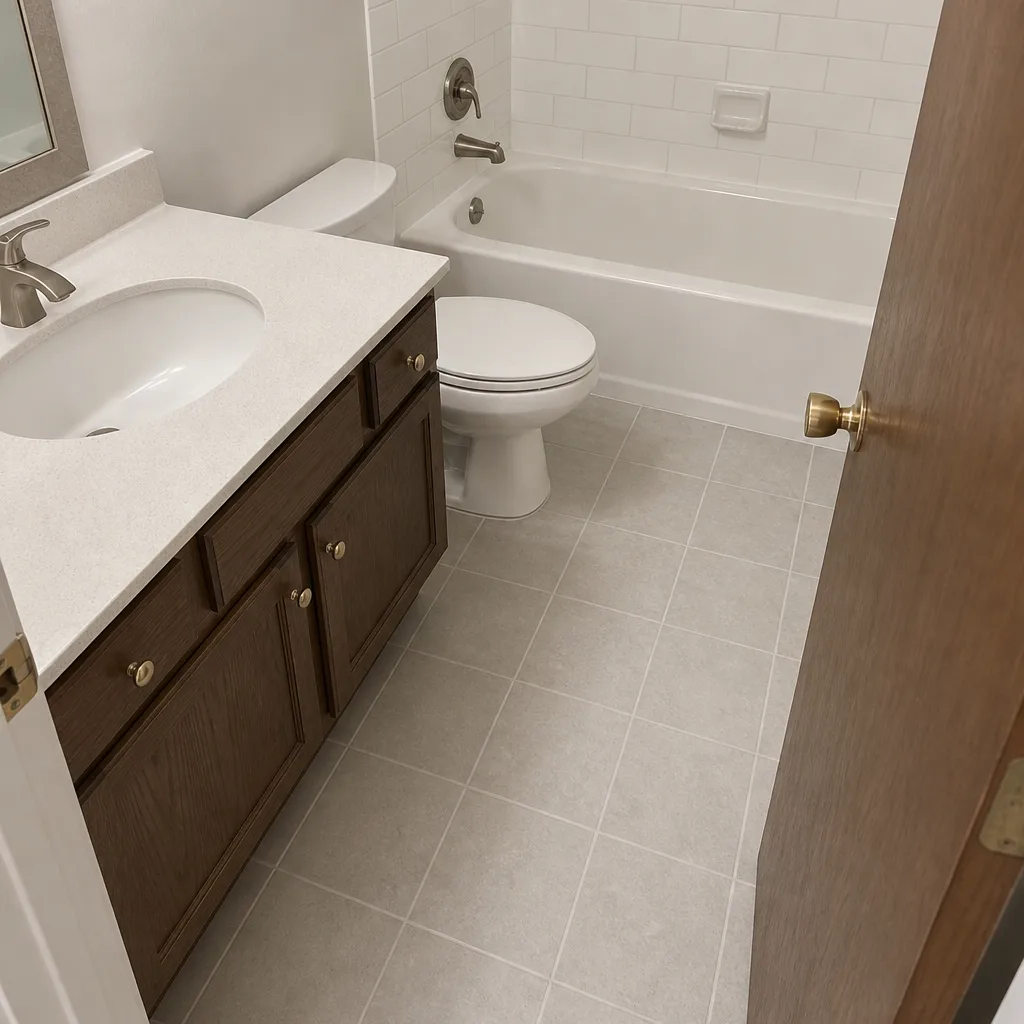
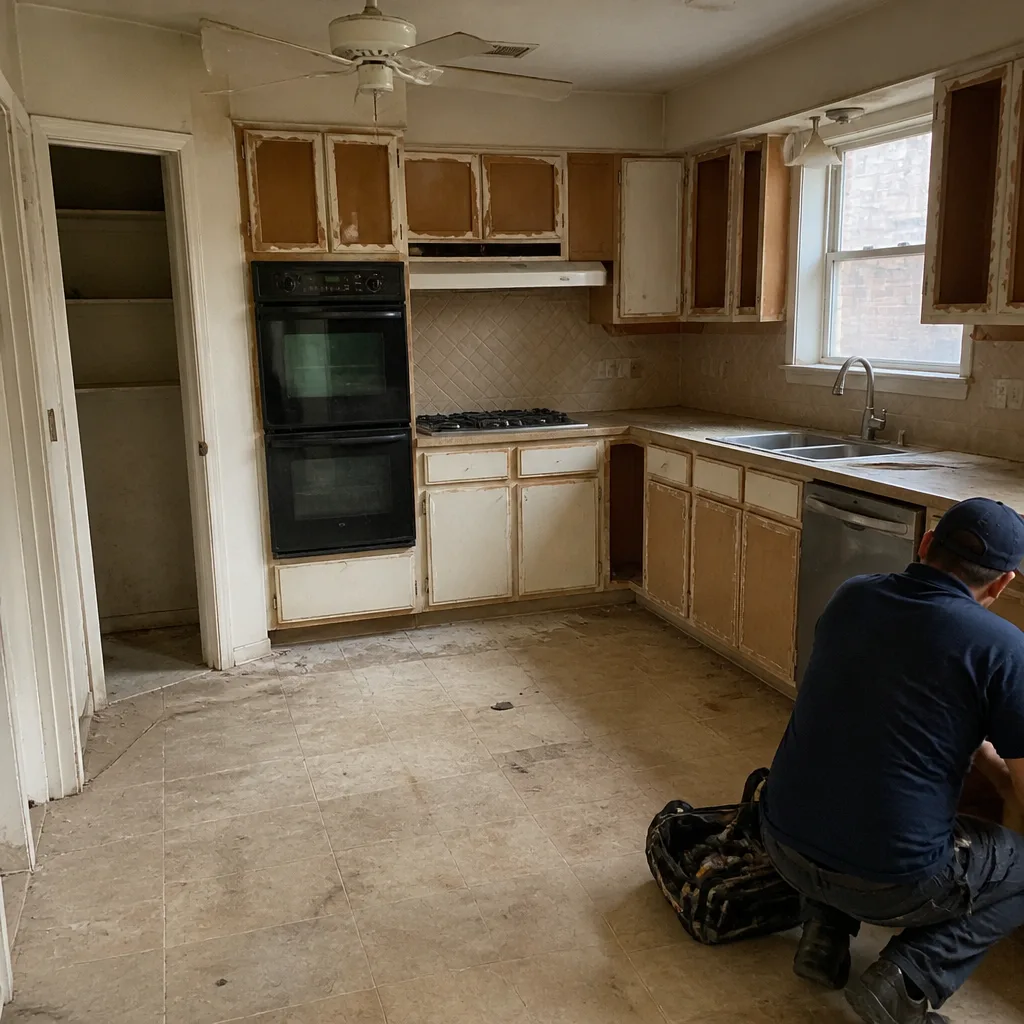
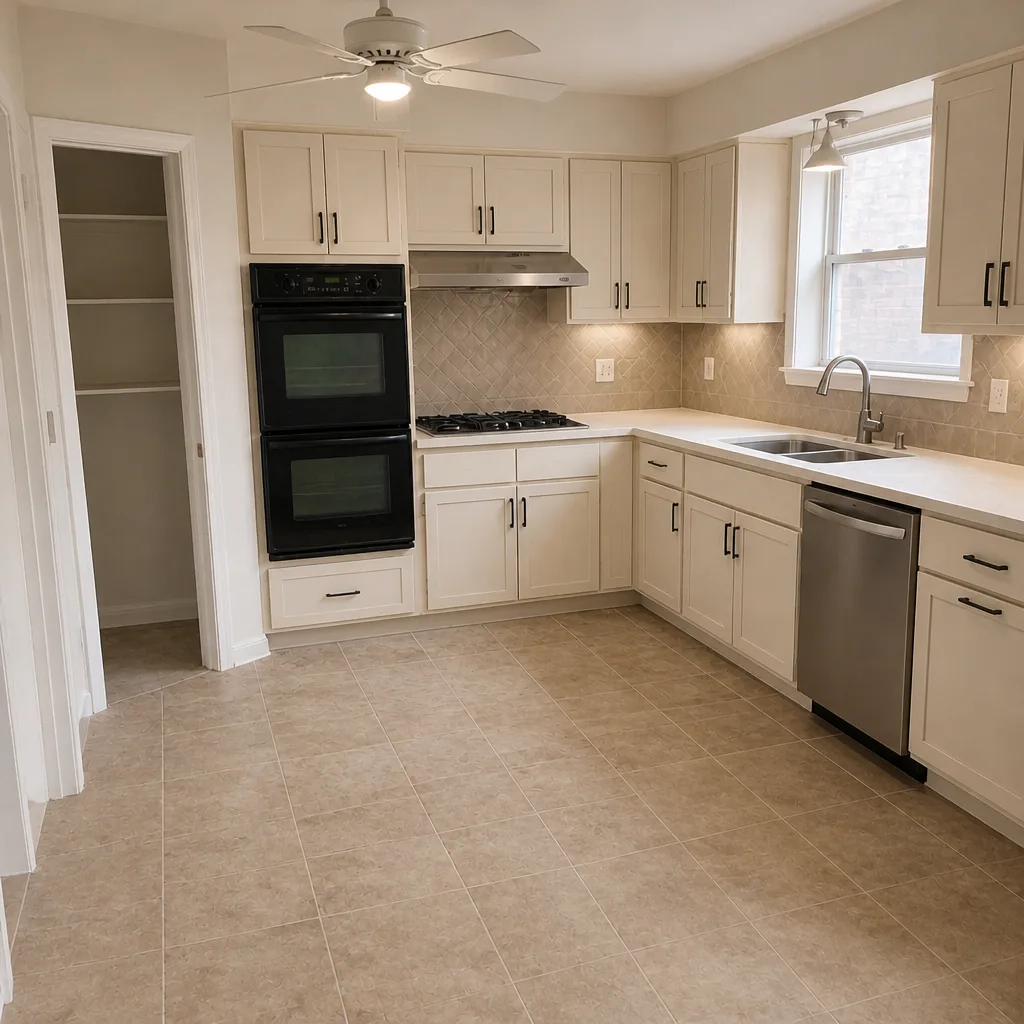
See the difference
 Before
 After
 Before
 After
 Before
 After
When to Call a Professional
Call now for an active roof breach, water entering a wall cavity, a foundation crack with accompanying door and floor symptoms, a burst supply line after the water is shut off, or a retaining wall that has rotated toward a slope or a structure. Call within the week for a fallen fence that isn’t exposing a pool or utility, a soft spot in a ceiling, or a hairline crack you want measured. Call for a second opinion if you’ve received a written estimate from anyone and want it reviewed line by line. Every visit we make includes a documented photo record of what we found and what we did, and it’s included, not an upgrade. Rowan Construction Group Plano offers free estimates in Plano – call (844) 761-8346 to schedule one.
Frequently Asked Questions
Get off the roof and call for a tarp. Moving water is the urgent problem, so move furniture and valuables out from under the breach, drape six-mil poly sheeting from the attic if you can reach it safely, and call your contractor for temporary protection. Do not climb a wet roof yourself.
No. Most cracks that appear after a rain event in Plano’s clay soils are monitoring cases, not repair cases. A quarter-inch width, stair-step brick cracks, a sticking door, and a sloping floor together indicate you need a professional evaluation; a single hairline crack on a drywall seam is documented and watched.
Most policies cover reasonable emergency stabilization to prevent further damage, and you should call your insurer early. Temporary measures like tarps and board-ups generally don’t require a permit; the permanent repair does. Structural, electrical, and plumbing repairs in Plano go through the city’s permitting process even after a declared emergency.
It’s the number of fasteners per shingle, and it directly affects how much wind uplift the roof can take. A 6-nail pattern is what most manufacturers require for higher wind-uplift ratings in North Texas. If your roof is builder-grade 4-nail, ask a roofer to confirm the pattern during your next inspection, before the next storm.
Emergency tarping typically runs a few hundred dollars depending on roof size and complexity, and it’s often covered by insurance as part of the claim. The poly sheeting and materials for a homeowner-side temporary measure run roughly $45 to $80. Call (844) 761-8346 for an exact quote – estimates are free.
Yes, we offer a free second opinion on any written estimate. Bring it in and we’ll review it line by line, at no charge. That includes naming the product line, the fastening spec, and the permit scope – the three places a quote usually goes soft.
The Bottom Line

Construction emergency preparedness for a Plano home is a paperwork and contact-management exercise, not a shopping list. Learn the four failures, learn the one question that sorts emergency from schedule, and assemble the pre-qualification file with license numbers, insurance expiration dates, and a live emergency contact for each trade. Photograph your roof and attic on a sunny day. Keep a roll of six-mil poly in the garage. Know that stabilization doesn’t need a permit and a full repair does. Do that work now and a storm becomes a repair instead of a remediation. Under Clause 1, the price is written before anyone starts, and we honor that in an emergency the same as any other job. Call (844) 761-8346 for a free estimate.
Written by the team at Rowan Construction Group Plano.