
Last updated November 18, 2026








Free written scope consultation - allowances, timeline, and change-order rules on paper before a single trade is scheduled
Bathroom Remodeling Maintenance Schedule: What to Do and When
Most grout failures that look like bad workmanship are actually missed 6-month sealing windows. That cracked line of grout along the shower floor, the haze that won’t scrub out of the tile after a year, the caulk joint that pulled away at the tub edge – in our experience, the majority aren’t installation defects. They’re maintenance gaps. A reseal takes 20 minutes and about a $12 bottle of Aqua Mix Sealer’s Choice Gold, and skipping it is what turns a bathroom that should last 20 years into one that needs re-grouting at year three. This guide lays out a real schedule for the first year after a Plano remodel and beyond, tied to elapsed days from your project completion date, not vague seasonal advice.
Quick Answer
Reseal tile grout every 6 to 12 months, inspect caulk joints at tub and shower transitions annually and replace them every 3 to 5 years, and clean your exhaust fan every 6 months. In Plano, where the water averages 300+ ppm of hardness, you’ll need to step up fixture cleaning and descaler frequency compared with national recommendations. The one-year post-remodel calendar below gives you exact dates.
Styles & brands we work with
- Kitchen remodeling
- Bathroom remodeling
- Home additions & ADU
- Roofing
- Windows & doors
- Driveway & pavers
- Fence
Table of Contents
- Why the First 365 Days Decide the Remodel’s Lifespan
- Tile and Grout: The 6-Month Resealing Window
- Caulk Joints at Tub and Shower Transitions
- Exhaust Fan Cleaning and Moisture Control
- Plano’s Hard Water and What It Changes
- Reading Your Warranty to Tell a Defect From a Gap
- Your Printable Year-One Calendar
- Product Names for Each Task
Why the First 365 Days Decide the Remodel’s Lifespan
Builders know that a bathroom’s useful life is set by the small maintenance decisions made in the first year, not by whether the tile was $4 or $14 a square foot. We’ve watched a $28,000 bathroom fail earlier than a $12,000 one because the expensive project’s owners skipped the six-month reseal and let the shower caulk run past year four. The materials were better. The upkeep wasn’t.
The reason is water and vapor. A bathroom is the wettest room in a house and the one with the most joints and penetrations. Every grout line and caulk bead is a potential path for moisture behind the tile, into the thinset, and eventually into the substrate. In a slab-on-grade Plano home, that moisture has nowhere good to go. The dried-out grout you can scrub is the visible symptom. The saturated backer board is the one that costs you a rebuild.
Post-remodel maintenance is a handoff. Your contractor installs the waterproofing membrane, the tile, the fixture set, and the exhaust fan, and then the responsibility for the years of upkeep moves to you. Treating that handoff as a structured list, not an afterthought, is the entire point of this guide.
What “maintenance” actually means in a finished bathroom
- Resealing penetrating stone and cementitious grout at fixed intervals to slow water absorption.
- Inspecting and replacing flexible caulk joints where two different materials meet.
- Cleaning the exhaust fan and clearing the duct so it can actually pull moisture from the room.
- Descaling and cleaning fixtures on a harder-water schedule than national averages suggest.
- Documenting what you did and when, so a future warranty claim or a buyer’s inspection has a record.
Tile and Grout: The 6-Month Resealing Window
Grout is porous, even good grout. Sealing doesn’t make it waterproof, but it dramatically slows water absorption and makes the surface stain-resistant. On a cementitious (portland-based) grout, we recommend resealing every 6 months on shower floors and walls, and every 12 months on floor tile outside the wet zone. Epoxy grout is the exception: it doesn’t need resealing at the same cadence, and over-sealing it is a waste.
The product matters. Aqua Mix Sealer’s Choice Gold is the solvent-based sealer we’ve seen hold up consistently in high-traffic wet areas, and it reseals over itself cleanly if the tile is properly cleaned first. Water-based sealers dry faster but typically need reapplication more often. Pick one and stick with it.
How to tell if your grout needs resealing now
- Drip water on the grout in the shower. If it beads and sits on top, the sealer is intact.
- If the water darkens the grout and soaks in within a minute or two, the sealer has worn through. Reseal.
- Look for hairline cracks along grout lines where moisture penetrates more easily. Those need attention first.
Why Schluter and membrane-substrate installs are different
If your remodel used a Schluter Kerdi or similar bonded-sheet waterproofing system, the waterproofing is on the substrate, not in the grout. That means the grout’s job is cosmetic and stain-resisting, not stopping water. You still seal cementitious grout on the same schedule, but your leak risk is much lower if the membrane was correctly installed and seam-taped. That’s why we photograph every membrane seam before tile goes on. If you ever need to make a warranty claim, the documentation settles it.
Caulk Joints at Tub and Shower Transitions
Caulk, not grout, belongs where two different materials meet: tub to floor, tub to tile wall, shower pan to tile, and the vertical corners of a tiled shower. These joints move as the tub flexes with the water weight and the house moves thermally. Rigid grout cracks there. Flexible, mold-resistant 100% silicone caulk (not acrylic-latex) is the right material, and it needs replacing every 3 to 5 years in a Plano house that spends half the year cycling between air-conditioned dry air and humid summer mornings.
Inspect caulk annually and consider a full replacement every 3 to 5 years as part of your regular maintenance. Look for:
- Darkening at the joint that doesn’t clean out with tile cleaner.
- Peeling or pull-away from either surface.
- Soft, chalky texture when you press a fingernail into it.
- Hairline cracks at the vertical corners of a tiled shower.
Replace silicone caulk properly: cut the old bead out with a utility knife and caulk tool, clean the joint with mineral spirits, let it dry fully, and use fresh silicone (older tube stock cures unevenly). Do NOT recaulk over failed caulk, because the new bead will fail within months.
Exhaust Fan Cleaning and Moisture Control
Your exhaust fan is doing heavy lifting. Every shower puts 40 to 60 percent relative humidity into the room; without adequate ventilation, that moisture condenses on cool surfaces and gets absorbed into the grout and drywall. A fan with a clogged grille or a dusty centrifugal wheel moves half the air it’s rated for. Cleaning it every 6 months is the cheapest moisture control you will ever buy.
How to clean an exhaust fan safely
- Turn the fan off at the switch and, if your fan has its own breaker or you’re on a shared lighting circuit, cut power at the panel. Never reach into a running fan.
- Remove the grille (usually two spring clips) and wash it in warm soapy water.
- Vacuum the visible dust off the fan blades with a soft brush attachment. Don’t force the blades spinning.
- Reinstall the grille and run the fan briefly to confirm it spins freely.
If your fan is more than 8 years old or is a builder-grade model installed in the original 1990s build, its airflow may simply be inadequate. ASHRAE recommends a minimum of 100 CFM for most bathroom exhaust, and older fans often can’t reach that. Upgrading to a modern energy-recovery or higher-CFM fan during a Plano remodel is worth the $200 to $400 for materials plus install.
Plano’s Hard Water and What It Changes
Plano’s municipal water averages 300+ ppm total hardness, which is firmly in the “hard to very hard” range. That number has real consequences for a bathroom. Calcium and magnesium scale builds up inside your showerhead, on the glass, on chrome fixtures, and along the bottom of the toilet bowl far faster than in softer-water markets. A house in Austin or San Antonio will have its own version of this problem; in Plano, a homeowner who follows national cleaning recommendations (typically once a week for shower glass) will find scale deposits within days.
What to change in Plano
- Wipe shower glass and polished chrome with a squeegee after every shower to slow scale formation.
- Use a citric-acid-based descaler (or a vinegar solution) weekly, not the generic all-purpose cleaner national guides suggest.
- Soak the showerhead in a vinegar solution quarterly to remove mineral buildup, and replace it every 3 years if flow is still reduced.
- Run a water softener if your home doesn’t already have one. For Plano hard water, this is not a luxury – it saves the fixtures.
The reason this matters for a remodel specifically: if you installed a brand-name Kohler or Toto fixture, hard water is the most common reason for a premature warranty claim, and it’s the claim most often denied because descaling frequency wasn’t documented. Keep a short maintenance log. In our experience, documenting “cleaned and descaled on 2/14, 4/15, 6/14” is what makes a fixture claim straightforward.
Reading Your Warranty to Tell a Defect From a Gap
The single most important document after a bathroom remodel is the written warranty, and most homeowners don’t read it carefully. It should specify:
- The scope of what’s covered (labor, materials, waterproofing system), separately for each.
- How long each is covered – plumbing and water intrusion typically carry longer terms than cosmetic tile.
- What’s explicitly excluded (usually: cleaning products, hard-water damage, missed maintenance windows, unapproved modifications).
- The claim process – the phone number, the response timeline, and what documentation you need to submit.
The reason it matters for maintenance: when a failure occurs, the first question is whether it’s a defect or a maintenance gap. A leaking shower with a membrane that was installed without embedded seam tape is a defect. A leaking shower where the pan was unprotected and the grout went 14 months without resealing is a maintenance gap. Your photo record, your maintenance log, and the warranty terms decide which.
We build this into every bathroom we deliver under The Haven Standard, Clause 1: a written scope and written warranty before any work begins, no change order unsigned. Under that same standard, our Free Second Opinion on any written estimate is available to any Plano homeowner reviewing a competitor’s quote, line by line, at no cost. The 365-Day Done Right Promise backs the work: if it isn’t right in the first year, we make it right. That’s the point of writing the warranty down before the tile is set.
For homeowners extending a bathroom or adding a primary suite bath, our home additions and ADU work in Plano follows the same written-warranty discipline. If your project touches the driveway or exterior path to the bathroom door, the driveway and pavers page for Plano covers the maintenance schedule for that surface. If you’re planning a full scope, start at the Rowan Construction Group Plano home page. For fencing work around a pool-adjacent bathroom or a privacy screen at a new wing, fence installation in Plano has the schedule for wood, composite, and vinyl, and note that products like Jerith and Bufftech aluminum and vinyl need their own annual washdown.
Your Printable Year-One Calendar
This calendar is tied to elapsed time from project completion, not to seasons, because the “spring” in Plano is February and the “fall” is November. Use your project completion date (Day 0) and add the intervals below. Print this and tape it to the inside of the bathroom vanity door.
The year-one maintenance calendar
- Day 7: Inspect all caulk joints and grout lines for hairline cracks, particularly at the tub and shower transitions. Note any that appeared.
- Day 30: Confirm the exhaust fan is running smoothly and the grille is clean. Check water flow at each fixture for sediment after new plumbing.
- Day 90: Full inspection of grout and caulk. Descaling treatment on glass and chrome. Photograph all wet areas for your maintenance log.
- Day 180: Reseal cementitious grout on shower surfaces (Aqua Mix Sealer’s Choice Gold). Clean exhaust fan grille and blade. Descaling treatment.
- Day 270: Inspect caulk and grout. Check toilet seal and bowl for scale buildup. Clean fan grille. Photograph log.
- Day 365: Full annual: grout seal on shower surfaces and floor tile, caulk inspection, exhaust fan cleaning, showerhead soak and inspection, toilet valve and flush check. Compare photos to the Day 7 images.
- Year 2 and beyond: Repeat the 6-month grout seal and exhaust fan cleaning. Replace caulk every 3 to 5 years. Replace showerhead every 3 years in Plano hard water if flow drops.
That’s the entire discipline. Twenty minutes every six months, a careful hour at the year mark.
Product Names for Each Task
The right products make the task fast and the wrong ones make it worse. Here’s what we recommend brand-by-brand:
- Grout sealing: Aqua Mix Sealer’s Choice Gold (solvent-based, most durable we’ve tested), or Miracle Sealants 511 Impregnator for penetrating stone. Avoid water-based sprays on shower floors.
- Caulk: GE Supreme Silicone or Loctite Polyseamseal for tub and shower joints. 100% silicone in wet areas; paintable acrylic-latex inside dry corners only.
- Hard water descaling: Citric-acid descaler (Bio-Clean, or a 50/50 white-vinegar solution for intermittent use) on glass and chrome. Never acid on marble or travertine.
- Glass and shower doors: Diamond Fusion or similar hydrophobic coating applied annually after a full descale resists re-deposits for a year in Plano hard water.
- Exhaust fan maintenance: Soft brush vacuum attachment, warm soapy water for the grille. No spray lubricant inside the motor housing.
- Stone tile: Enhancing sealer (StoneTech Enhancer Pro) on natural stone; no standard cementitious sealer on marble or travertine.
All of these brands pass our vetted-material list. If you need to know which product goes with which installed material, call us with the tile name and our team can tell you from the project record.
Common Mistakes to Avoid
- Recaulking over failed caulk. A new bead applied over old silicone will pull away within months. Cut the old bead out completely, clean the joint, then recaulk.
- Using the wrong sealer on the wrong surface. Water-based sealer on a shower floor wears through in weeks; solvent (Aqua Mix) is the correct choice. Enhancing sealer on glazed porcelain will haze it.
- Skipping the exhaust fan for “just this once.” A clogged grille cuts airflow in half and forces moisture into grout and drywall, where damage compounds quietly.
- Following national descaling intervals in Plano hard water. Once a week at 300+ ppm, not once a month. This is the single biggest preventable damage in a Plano bathroom.
- Not documenting anything. A short maintenance log with dates and photos is what makes a warranty claim or a future buyer’s inspection go smoothly. A missing log is the most common reason a claim gets denied.
- Harsh acid on marble or travertine. A vinegar solution on natural stone will etch the surface permanently. Use pH-neutral stone cleaner and an enhancing sealer.
- Reaching into a running exhaust fan. Cut the power at the switch and the panel. This is a real safety point, not a formality.
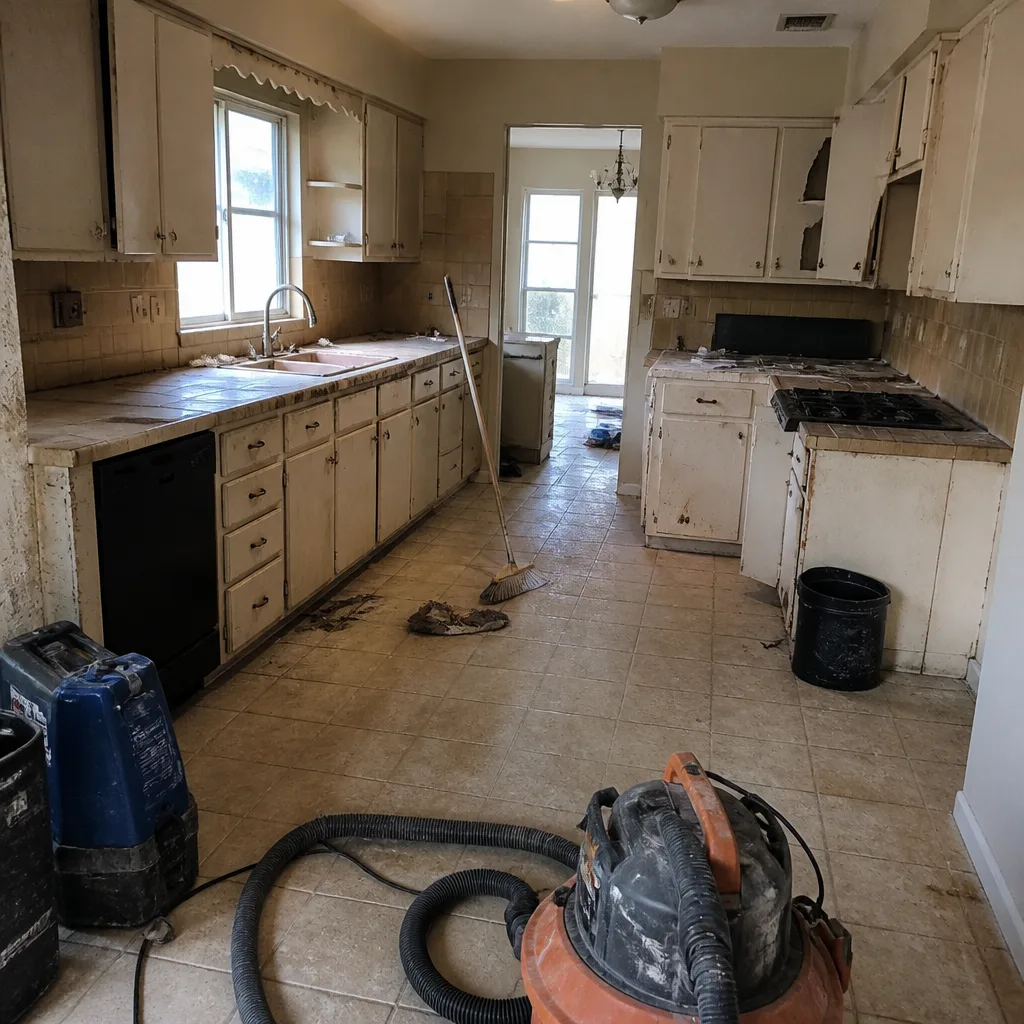
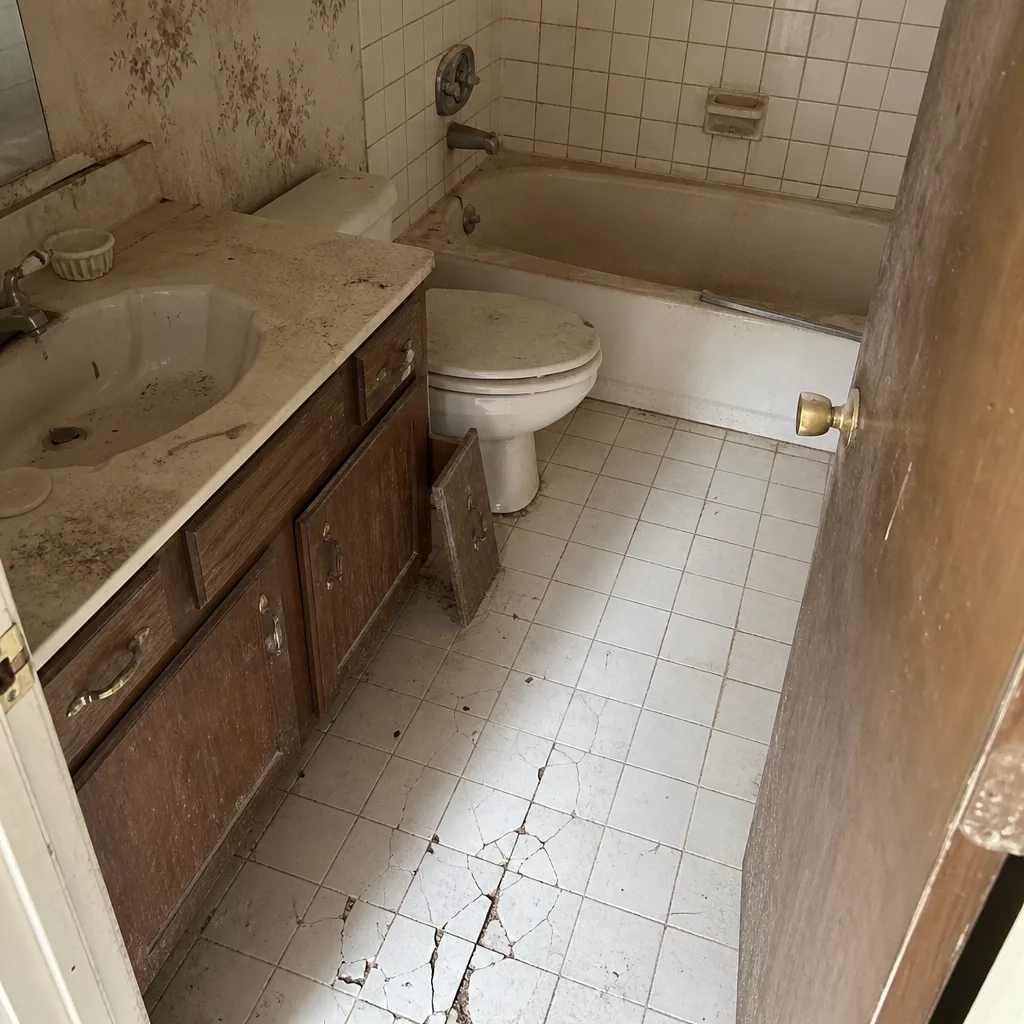
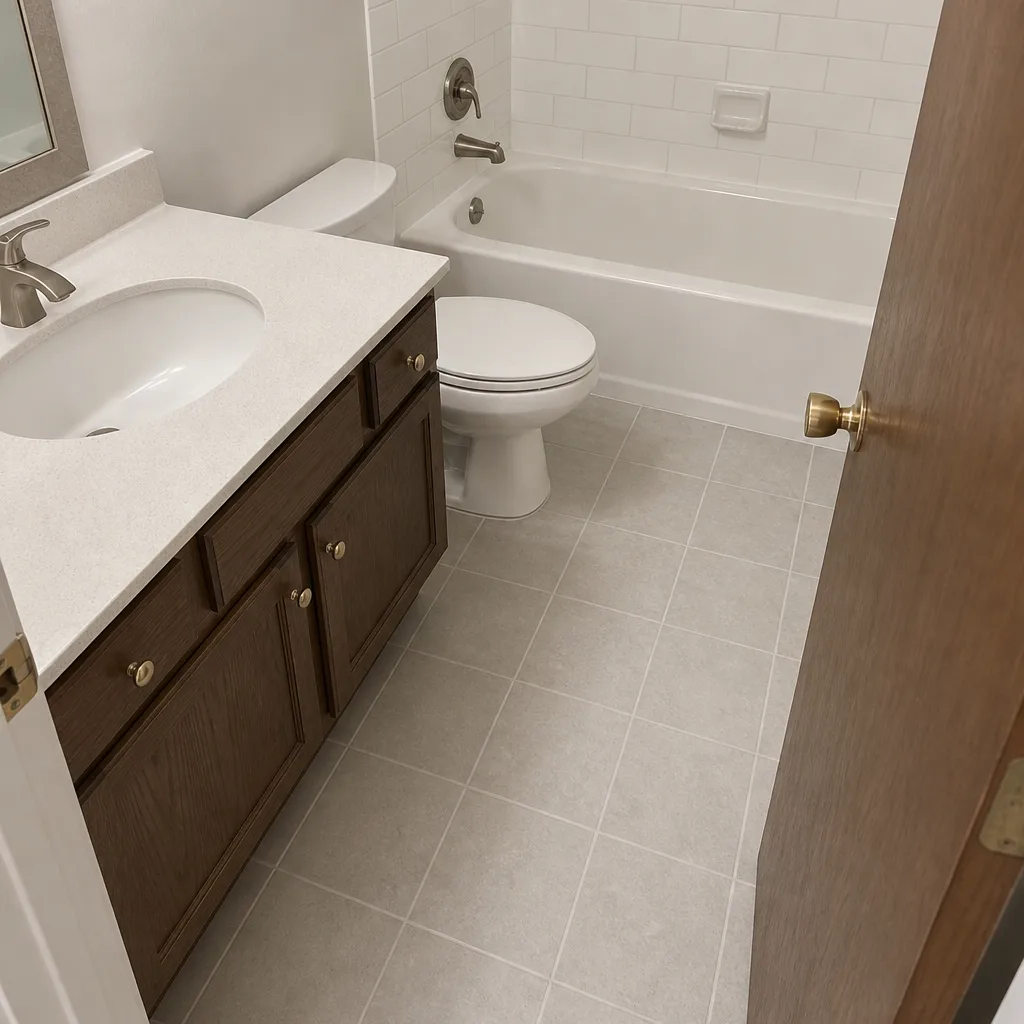
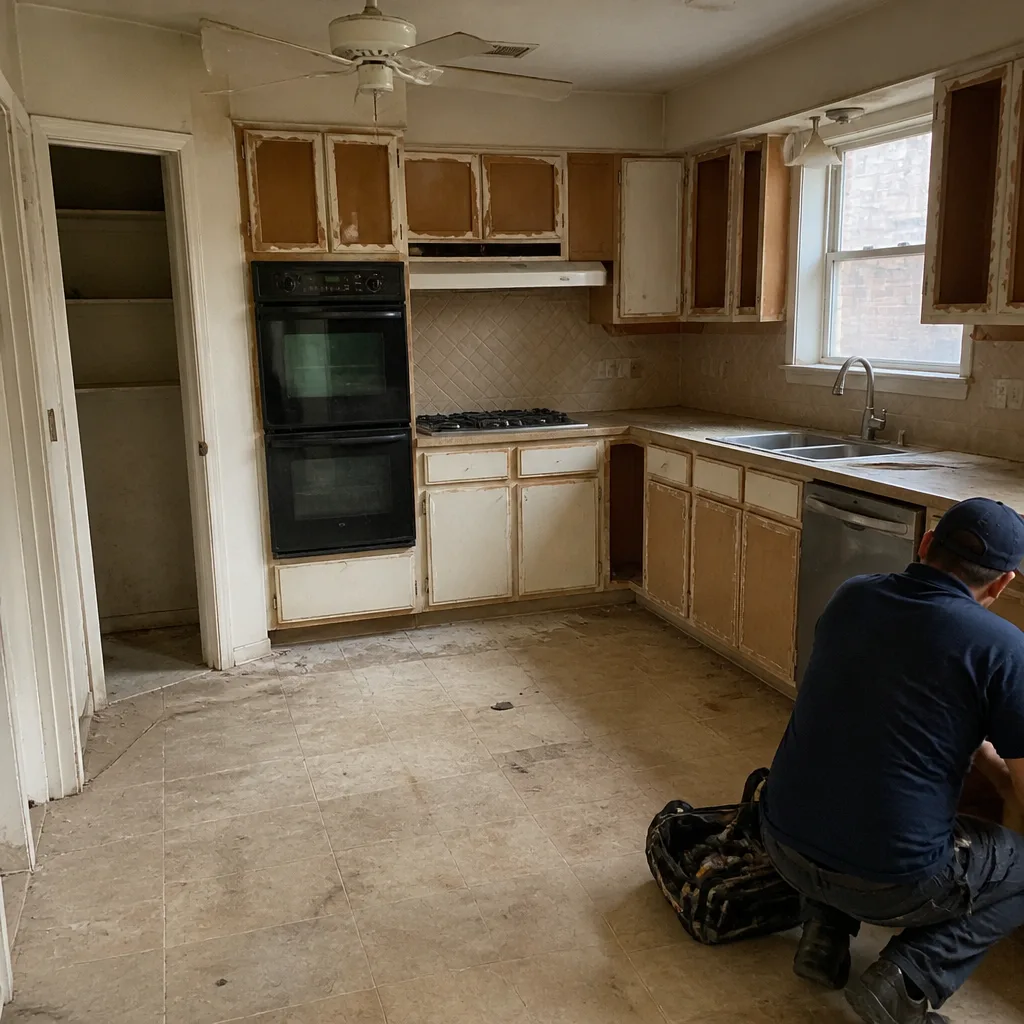
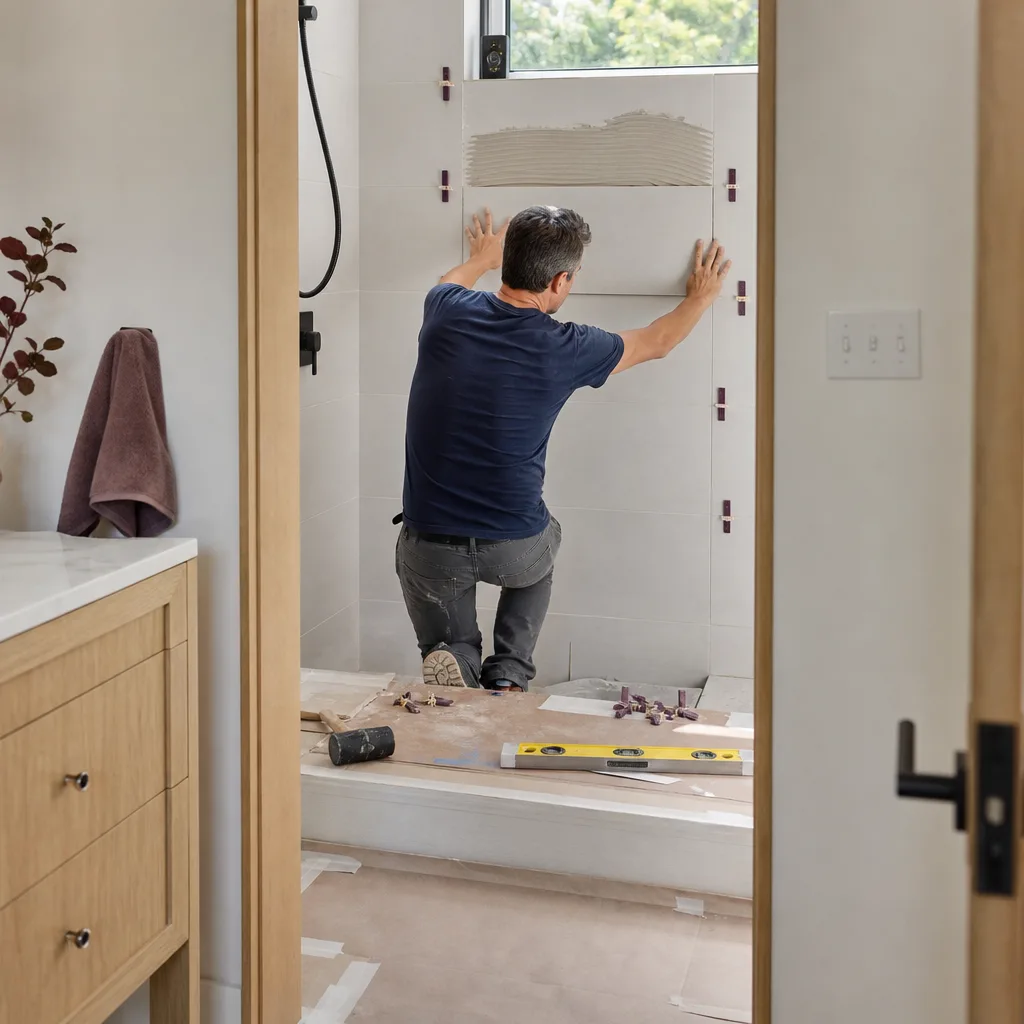
See the difference
 Before
 After
 Before
 After
 Before
 After
When to Call a Professional
Most maintenance is a DIY job for the homeowner with a spray bottle and a Monday evening. Some jobs aren’t. Call us if you’re seeing any of the following: water stains on the ceiling below the bathroom, a spongy floor under the tile, water wicking up the drywall outside the shower pan, mold that returns within a week of cleaning, a shower that pools water instead of draining, or a fixture that leaks at the supply line. Those point to a substrate, waterproofing, or plumbing issue that surface cleaning cannot fix. Do not disturb shower tile or the waterproofing membrane on your own – that’s work for a trained professional who can verify the membrane and the substrate are intact. Rowan Construction Group Plano offers free estimates in Plano – call (844) 761-8346 to schedule yours.
Frequently Asked Questions
Reseal cementitious grout every 6 months on shower surfaces and every 12 months on floor tile outside the wet zone. In Plano, our hard water means the shower resealing window is firmer at 6 months, not 12. Epoxy grout doesn’t need resealing on the same cadence. Call (844) 761-8346 if you’re unsure which grout you have – estimates are free.
No. We deliver a written flat price before any work begins, with a written scope and written warranty. Under The Haven Standard, Clause 1, no change proceeds until a change order is signed. That’s the administrative discipline that has kept our projects within a few percent of the agreed cost across 4,000-plus jobs.
Check the warranty and your maintenance log first. A leak with intact membrane photographs and documented resealing is likely a defect; a leak after 14 months of unsealed shower grout is a maintenance gap. The written warranty, the photo record, and your reseal dates are what decide the outcome. If you don’t have a log, call us and we’ll review the visible evidence.
Yes. At 300+ ppm hardness, scale builds up on showerheads, glass, and chrome far faster than in softer-water cities. Descaling weekly rather than monthly and soaking the showerhead quarterly are the practical adjustments. Installing a water softener is the best long-term move for a Plano bathroom.
A carefully maintained bathroom that reseals grout on schedule, replaces caulk every 3 to 5 years, and keeps the exhaust fan clean can reach 20-plus years on materials and layout. An unmaintained bathroom often needs re-grouting at year 3 and a full rebuild by year 12. The materials rarely fail first; the upkeep does.
Yes, we pull the permits and the inspection results are documented as part of the project record. On a bathroom remodel that touches plumbing, electrical (in particular the exhaust fan and any lighting changes), and framing, the inspected installation is what makes the manufacturer warranty and any future insurance claim clean. If a previous remodel was done without permits, we can review the record on a free estimate call.
If your project extends beyond the bathroom, the fence installation in Plano guide and driveway and pavers in Plano guide cover the maintenance schedules for Jerith aluminum, Bufftech vinyl, and Belgard or Techo-Bloc pavers – the same written-discipline approach applies to every one of our seven trades.
The Bottom Line
A bathroom remodel is only as strong as the maintenance schedule that follows it. Reseal grout every 6 months, inspect caulk annually and replace every 3 to 5 years, clean the exhaust fan every 6 months, and step up descaling in Plano’s 300+ ppm hard water. Keep a simple log of what you cleaned, sealed, or replaced and when. The Day 7, 30, 90, 180, 270, and 365 calendar in this guide is the whole discipline. Your warranty documentation, the photo record, and your signed scope protect you when something does fail. For bathroom remodels and any of our seven other trades, Rowan Construction Group Plano writes the price before work starts. Call (844) 761-8346 for a free estimate, and we’ll deliver a written line-item quote, a written warranty, and a documented handoff record that carries the bathroom through its first year and well beyond.
Written by the team at Rowan Construction Group Plano.