Last updated November 18, 2026
Free written scope consultation - allowances, timeline, and change-order rules on paper before a single trade is scheduled
The Complete Driveway & Pavers Guide for Plano Homeowners
Plano sits on Blackland Prairie clay, and that single geological fact changes every decision that follows. Expansive clay can move a poorly built paver base by more than an inch vertically in one dry summer, then push it back the moment the fall rains arrive. Most driveway failures we’re called out to inspect in Plano were not caused by bad pavers. They were caused by decisions made before a single paver was laid: undersized base depth, ignored drainage slope, and contracts that never specified either. This guide works backward from those documented failure points to show what a correctly specified Plano driveway actually requires, from base numbers to Belgard and Tremron pricing to the grading plan you should read before ordering materials.
Quick Answer
A paver driveway in Plano needs a minimum 6-inch compacted aggregate base (not the 4 inches common on sandy DFW soils), a confirmed 1 – 2% drainage slope away from the foundation, and a written contract that itemizes base depth, compaction method, edge restraint, and polymeric joint sand. Budget roughly $14 – $26 per square foot installed for concrete pavers in the current Plano market, with premium brands like Belgard and Techo-Bloc running toward the top of that range. The base and the slope are the two decisions that determine whether the driveway is still flat and tight in ten years.
Styles & brands we work with
- Kitchen remodeling
- Bathroom remodeling
- Home additions & ADU
- Roofing
- Windows & doors
- Driveway & pavers
- Fence
Table of Contents
- Why Plano Clay Demands a 6-Inch Base
- Material Brands and Per-Square-Foot Pricing in Plano
- How to Read a Plano Lot Grading Plan
- Plano Permit Rules for Driveway Replacement vs. New Construction
- What a Signed, Itemized Paver Contract Should Include
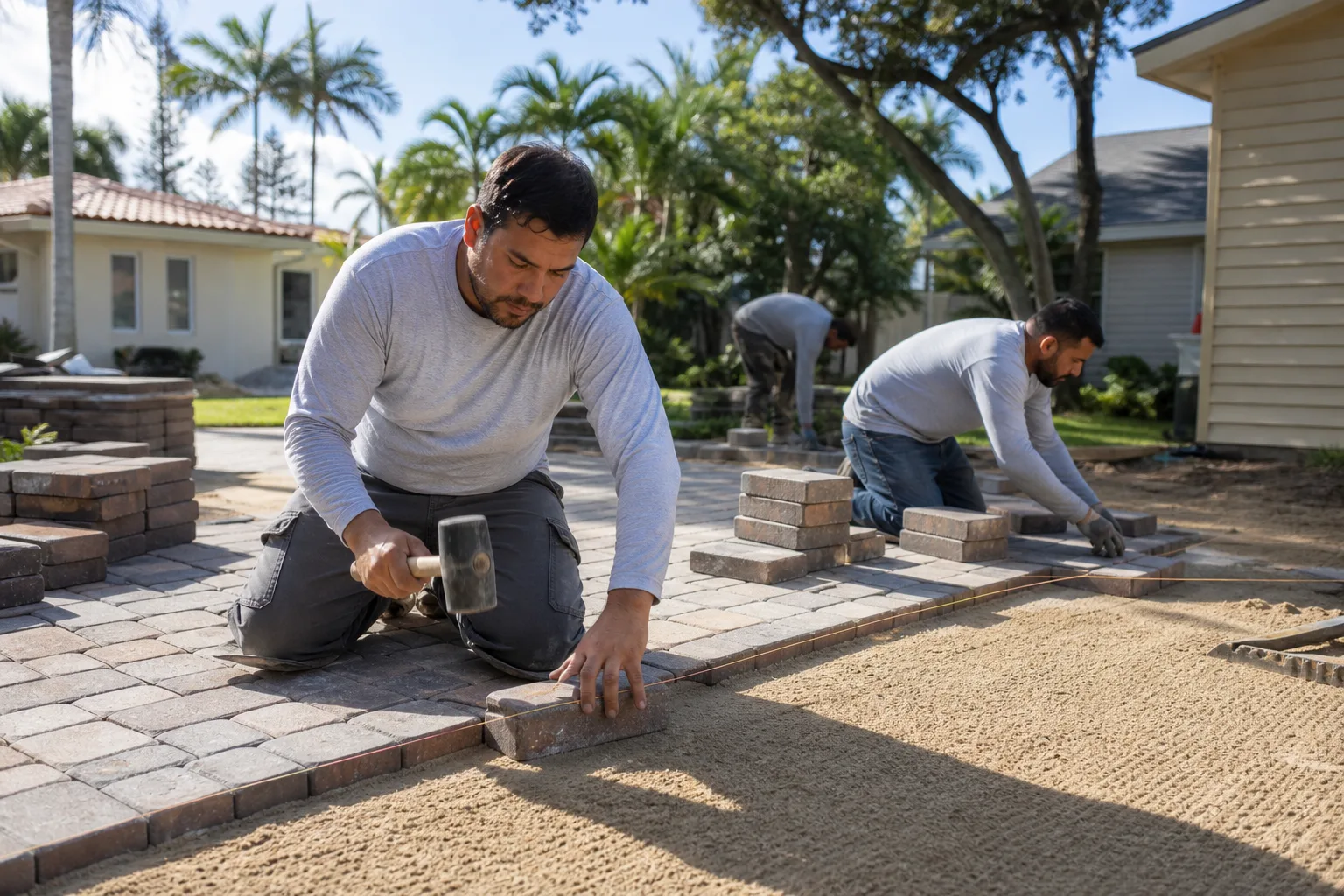
- The Installation Sequence, Step by Step
- Maintaining a Paver Driveway in North Texas
- Common Mistakes to Avoid
Why Plano Clay Demands a 6-Inch Base (Not the 4 Inches You’ll Hear)
The base is the compacted crushed-stone layer under the pavers, and it is doing more work in Plano than in almost any other DFW suburb. Blackland Prairie clay expands when it absorbs water and shrinks as it dries, moving vertically with the seasons. A base that’s too thin flexes with that movement, and the pavers above it heave, settle, and open at the joints. Driveways on the sandier soils west of Plano can sometimes hold at 4 inches of compacted base. On Plano clay, we specify 6 inches minimum, and on driveways that carry heavy trucks or sit on a known shrink-swell pocket, 8 inches is not unusual.
Depth alone doesn’t fix it. Compaction is the other half. Base stone that’s dumped and raked but never mechanically compacted in lifts (thin layers, typically 2 to 3 inches at a time, each one plate-compacted before the next goes down) will consolidate under traffic and produce the same ruts you were trying to avoid.
What a properly specified Plano base looks like:
- Excavation depth: 6 inches of compacted base plus the paver thickness (typically 2 3/8 to 3 1/8 inches) plus 1 inch of bedding sand. That’s roughly 9 to 10 inches of total excavation below finished grade.
- Base material: crushed limestone or road base graded to a tight, compactable curve, not fill dirt and not recycled concrete alone.
- Compaction: placed in lifts and compacted with a plate or roller, with density verified before sand goes down.
- Geotextile: a separation fabric between the clay subgrade and the base stone keeps fine clay particles from pumping up into the stone and softening it.
- Edge restraint: a spiked concrete or poly edge on all open sides, because a paver field without restraint spreads at the edges.
In our experience, an undersized base is the single most common reason a Plano paver driveway looks tired within three or four years. If you’re comparing quotes, ask each contractor to state the compacted base depth in writing. The number tells you most of what you need to know. For the full scope of what our crews build, see Driveway & Pavers in Plano.
Material Brands and Per-Square-Foot Pricing in Plano
Concrete pavers are the standard for Plano driveways, and the brand you choose moves the price meaningfully. The three names you’ll see most on Plano job sites are Belgard, Tremron, and Pavestone, with Techo-Bloc and Unilock showing up on higher-end installs. All are engineered to hold up to North Texas freeze-thaw and summer heat; the differences come down to color range, finish, and how tightly the units interlock.
Here are working price ranges for installed paver driveways in the current Plano market, per square foot, including base, bedding, pavers, edge restraint, and polymeric joint sand:
- Pavestone (entry tier): roughly $14 – $18 per square foot installed. Solid, straightforward, a good match for rentals and budget-conscious replacements.
- Tremron: roughly $16 – $21 per square foot installed. Broad color selection and popular in Plano neighborhoods where the HOA wants a specific palette.
- Belgard: roughly $18 – $24 per square foot installed. The brand most Plano homeowners ask for by name; strong on textured finishes and large-format styles.
- Techo-Bloc and Unilock: roughly $20 – $26 per square foot installed, sometimes higher on specialty finishes. Premium dimensional looks.
Two costs sit outside that per-square-foot number and should appear as separate line items: demolition and haul-off of the old surface, and any subgrade repair if the existing base has failed. A 400-square-foot single-car apron in Plano typically lands between $6,000 and $9,500 all-in, while a full two-car driveway in the 600- to 800-square-foot range runs from about $9,000 to $17,000 depending on brand and site conditions. A written quote should show those dollar figures before work starts, not a “call for pricing” placeholder.
Keep brand claims honest. If a quote says Belgard, the invoice should say Belgard, with the specific style named. We can produce the brand and spec on request, and so should anyone you hire.
How to Read a Plano Lot Grading Plan Before You Order Materials
Pavers set on a perfectly built base still fail if the water has nowhere to go. Plano’s clay holds water, and a driveway that ponds against the garage slab or routes runoff toward the foundation creates a problem that no paver brand can fix. The fix is a drainage slope of 1% to 2% away from the structure (roughly 1/8 to 1/4 inch of fall per foot), confirmed before the material order goes out.
Your lot grading plan was filed with the city when the house was built, and it shows the intended drainage pattern. Here’s how to read it:
- Find the spot elevations. The plan labels grades at the garage slab, the street, and the lot corners. The pattern of those numbers tells you which way water is meant to run.
- Compare the garage slab to the street. Water should move from the slab toward the street or a defined swale, not sit in the middle of the drive.
- Check the side-yard swales. Plano lots often route roof and surface water down a shallow swale along the property line. A new driveway should not block it.
- Confirm the fall with a level on site. Plans describe intent; the finished grade is what counts. A laser level or a string line will show whether you actually have 1 – 2%.
- Plan a channel drain if the geometry fights you. Some Plano lots simply don’t have the grade for a natural slope, and a trench drain across the apron is the honest answer.
Ordering material before the slope is confirmed is a costly sequence error. If the grade has to be corrected after the base is compacted, you’re paying twice for excavation.
Plano Permit Rules for Driveway Replacement vs. New Construction
Permit requirements in Plano differ depending on whether you’re replacing an existing driveway in the same footprint or creating a new one. A straight replacement of a residential driveway in its existing location and dimensions is generally treated as routine maintenance and typically does not require a separate building permit. New driveway construction, widening beyond the original footprint, changes to a curb cut or approach at the street, and any work that alters drainage or the right-of-way usually do require city review.
A few Plano-specific things worth knowing:
- Right-of-way and approach: the point where the driveway meets the street (the approach or curb cut) is city jurisdiction. Modifying it triggers review.
- Drainage impact: new hardscape that changes how water leaves the lot can require a drainage plan, especially where adjacent lots are affected.
- HOA approval: many Plano subdivisions layer HOA rules on top of city code, particularly on material and color. Get that approval in writing before ordering pavers.
- Inspection sequence: where a permit applies, base and subgrade are often inspected before pavers go down. Build that step into the schedule.
Pull the permits, get the inspections passed, keep the paperwork. A contractor who waves off the permit question on new work is telling you something about how the rest of the job will be documented. Our position is simple: written scope, written price, permits pulled where the code requires them.
What a Signed, Itemized Paver Contract Should Include, Line by Line
The contract is where a Plano paver driveway succeeds or fails before anyone touches a shovel. A number on a napkin is not a scope. Here’s what an itemized, signed contract should show line by line:
- Square footage and layout: measured area, paver pattern, and the specific brand and style (for example, Belgard Catalina in a given color).
- Demolition and haul-off: what comes out, how it’s disposed of, and the cost.
- Excavation depth: stated in inches, matching the 6-inch minimum compacted base for Plano clay.
- Base specification: material type, lift thickness, compaction method, and whether geotextile is included.
- Bedding sand: type and depth (typically 1 inch).
- Edge restraint: material and method, on every open edge.
- Drainage: the slope to be achieved, and any channel drain or swale work, with a dollar figure.
- Joint sand: polymeric sand, specified.
- Permits and inspections: who pulls them and who pays.
- Change order clause: no work proceeds on any change until a written change order is signed.
- Payment schedule: tied to milestones, not to a large deposit up front.
- Warranty: written, with a stated term, printed rather than promised verbally.
A flat written price with this scope attached is the standard, and the reason projects finish within a few percent of the agreed number. If a quote arrives without these lines, the price is a guess, not a price. The 365-Day Done Right Promise we back our work with is only meaningful when the scope it protects is written down.
The Installation Sequence, Step by Step
What a correctly built Plano driveway actually involves, in order:
- Mark and measure. Layout, square footage, and drainage direction confirmed against the grading plan.
- Demolish and haul off. Existing surface removed and disposed of.
- Excavate to depth. 6 inches of compacted base plus paver thickness plus 1 inch of bedding sand.
- Proof-roll and prepare the subgrade. Soft spots in the clay are found and repaired, not buried.
- Lay geotextile separation fabric. Keeps clay fines from pumping into the base stone.
- Place and compact base in lifts. 2- to 3-inch layers, each compacted before the next.
- Set edge restraint. Spiked edge on all open sides.
- Screen bedding sand. A consistent 1-inch layer, screeded to grade and slope.
- Lay pavers to the pattern. Cut units at edges and around drains and utilities.
- Compact and sweep polymeric sand into joints. The joint sand locks the field together.
- Final compaction and cleanup. Documented with photos of the base, the slope, and the finished surface.
If you’re also planning fencing or a rear addition, sequence the driveway work with those projects so excavation and grading happen once. Our Fence Installation in Plano and Home Additions & ADU in Plano teams coordinate with paved work so the heavy equipment isn’t moving across a fresh finish. More on how we run the whole scope is on the Rowan Construction Group Plano home page.
Maintaining a Paver Driveway in North Texas
A well-built paver driveway holds up to Plano’s heat and clay, but a little upkeep goes a long way. The two enemies are weed growth in the joints and water finding a low spot.
- Replenish polymeric sand every 2 – 4 years where joints widen, particularly after a hot, dry summer. This is what keeps weeds out and locks the field together.
- Watch for ponding after rain. A new low spot means the base has shifted. Investigate early, before the pavers loosen.
- Keep weep points clear. If a channel drain is present, clean it before the fall rains.
- Deal with efflorescence quickly. Pale mineral bloom on the pavers is common on new installs and typically self-resolves, but a persistent patch is worth a look.
- Don’t ignore joint separation. Joints opening in one area usually point to a base or drainage issue beneath, not the paver.
Most of the maintenance above is minor. The expensive repair is a failed base, and that’s the one a properly specified initial build prevents. If you’re maintaining an older surface and weighing replacement, the pricing structure in the paver driveway service page is the place to start.
Common Mistakes to Avoid
- Accepting a 4-inch base on Plano clay. Sandy-soil numbers get reused on clay lots, and the driveway pays for it within a few seasons.
- Skipping the grading plan. Ordering pavers before confirming the 1 – 2% slope is the most expensive sequence error we see in Plano.
- Picking a brand that isn’t named in the contract. “Belgard or equal” is an invitation to substitution. Insist on the exact style in writing.
- Overlooking HOA material rules. Many Plano subdivisions dictate paver color, and a rejected finish means removal and replacement.
- Treating new driveway construction as a routine replacement. Any change to the footprint or curb cut is a different permit question, and getting it wrong costs more than the permit.
- Signing a contract without a change order clause. Without written change orders, the final invoice drifts from the price you agreed to.
- Reusing a base that has failed. A new paver surface over a compromised base will fail the same way the old one did.
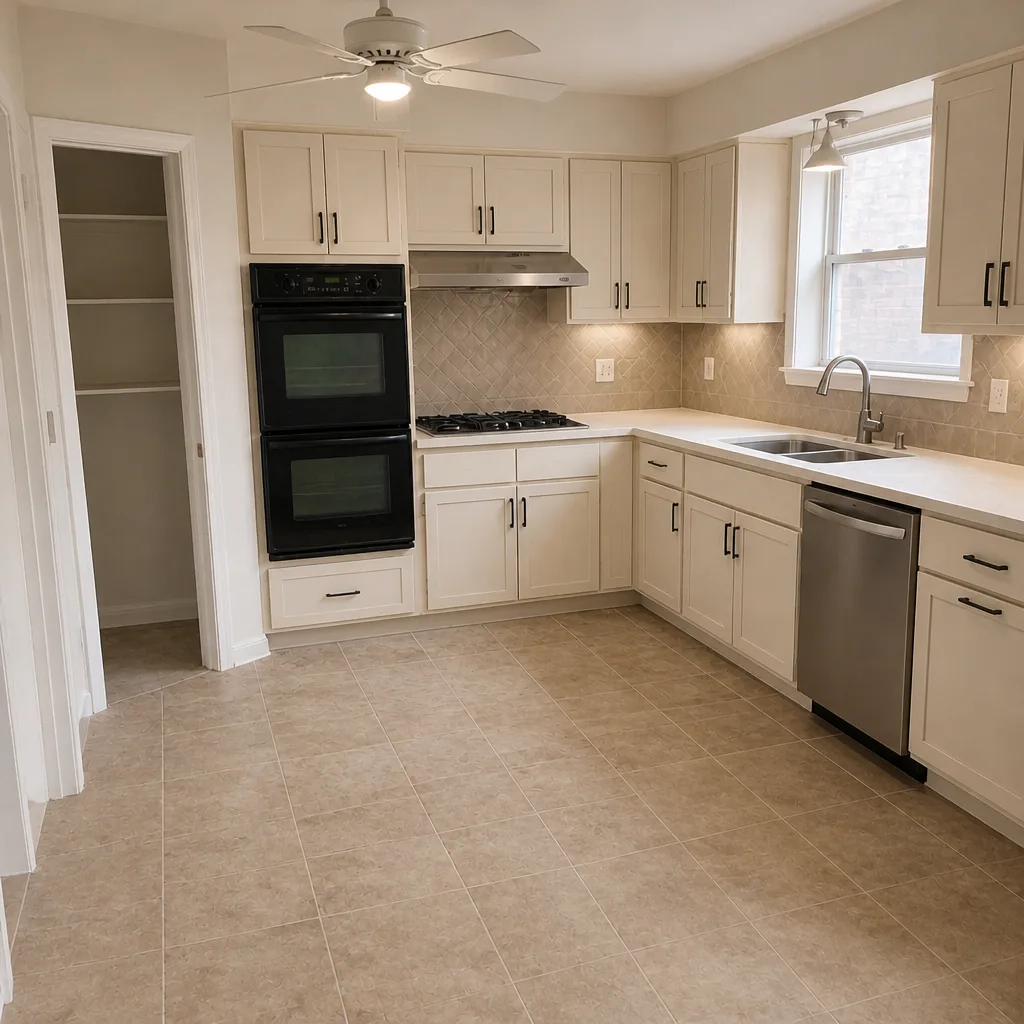
See the difference
 Before
 After
 Before
 After
 Before
 After
When to Call a Professional
Paver driveways sit in the category of work where a wrong base depth is invisible for two or three years and expensive after that. Call a professional when you’re seeing ponding against the garage, joints that open in a pattern, pavers that rock underfoot, or a driveway surface that’s heaved in one section. Any new driveway on Plano clay that involves excavation, a curb cut, or a change to drainage warrants a professional spec and a written contract. High-stakes excavation, base compaction, and drainage correction aren’t a weekend-project scope, and a base that’s undersized from the start can’t be fixed by the paver.
Rowan Construction Group Plano offers free estimates in Plano, and we’ll review a competitor’s written quote line by line at no charge as a second opinion. Call (844) 761-8346.
Frequently Asked Questions
Paver driveways in Plano run roughly $14 – $26 per square foot installed, depending on brand and site conditions, which puts a typical two-car driveway between about $9,000 and $17,000. Belgard and Tremron sit in the middle to upper part of that range; Pavestone is the entry tier. Call (844) 761-8346 for an exact written quote, estimates are free.
At least 6 inches of compacted aggregate base, placed in lifts and mechanically compacted, because Blackland Prairie clay expands and shrinks seasonally and a thinner base flexes. That compares to roughly 4 inches common on sandy DFW soils. The depth should be stated in inches in your written contract.
A straight replacement in the same footprint is generally treated as maintenance and typically doesn’t need a separate building permit, while new construction, widening, or changes to the curb cut at the street do require city review. HOA approval is a separate layer that many Plano subdivisions require. Confirm your specific case with the city before work starts.
A 1 – 2% slope away from the garage and toward the street or a swale, which is about 1/8 to 1/4 inch of fall per foot. Confirm it against your lot grading plan and on site with a level before materials are ordered. If the lot’s geometry doesn’t allow it, a channel drain is the honest fix.
A properly specified paver driveway on a 6-inch compacted base with correct drainage can last decades, with polymeric sand replenished every 2 – 4 years. The pavers themselves rarely fail; the base and the slope are what determine longevity on Plano clay. A base that’s too thin is where most premature failures come from.
No work proceeds on any change until a written change order is signed, which is how a project finishes within a few percent of the number you agreed to. Line items for demolition, base, slope work, and permits are set in the written quote up front. Call (844) 761-8346 to schedule your free estimate.
The Bottom Line
A Plano paver driveway succeeds or fails on two numbers: 6 inches of compacted base for Blackland Prairie clay, and 1 – 2% drainage slope confirmed before materials arrive. Get those right and the driveway holds its grade and its joints for decades. Get them wrong, and no paver brand will save it. Choose your brands by name (Belgard, Tremron, Techo-Bloc), insist on an itemized written contract with a change order clause, and confirm the permit question for any new construction or curb change. The paperwork and the base are the whole game.
Get Your Written Price Before Any Work Starts
Rowan Construction Group Plano quotes every paver driveway with a flat written price and a written scope, and no work proceeds on a change until the change order is signed. Every visit includes a documented photo record, our crews are background-checked and uniformed, and a live person answers our line around the clock. We also offer a free second opinion on any written estimate you already have. Call (844) 761-8346 for a free estimate, and we’ll put the base depth, the slope, and the brand in writing before anything else happens.
Written by the team at Rowan Construction Group Plano.