Last updated November 18, 2026


Free written scope consultation - allowances, timeline, and change-order rules on paper before a single trade is scheduled
Fence Installation Maintenance Schedule: What to Do and When
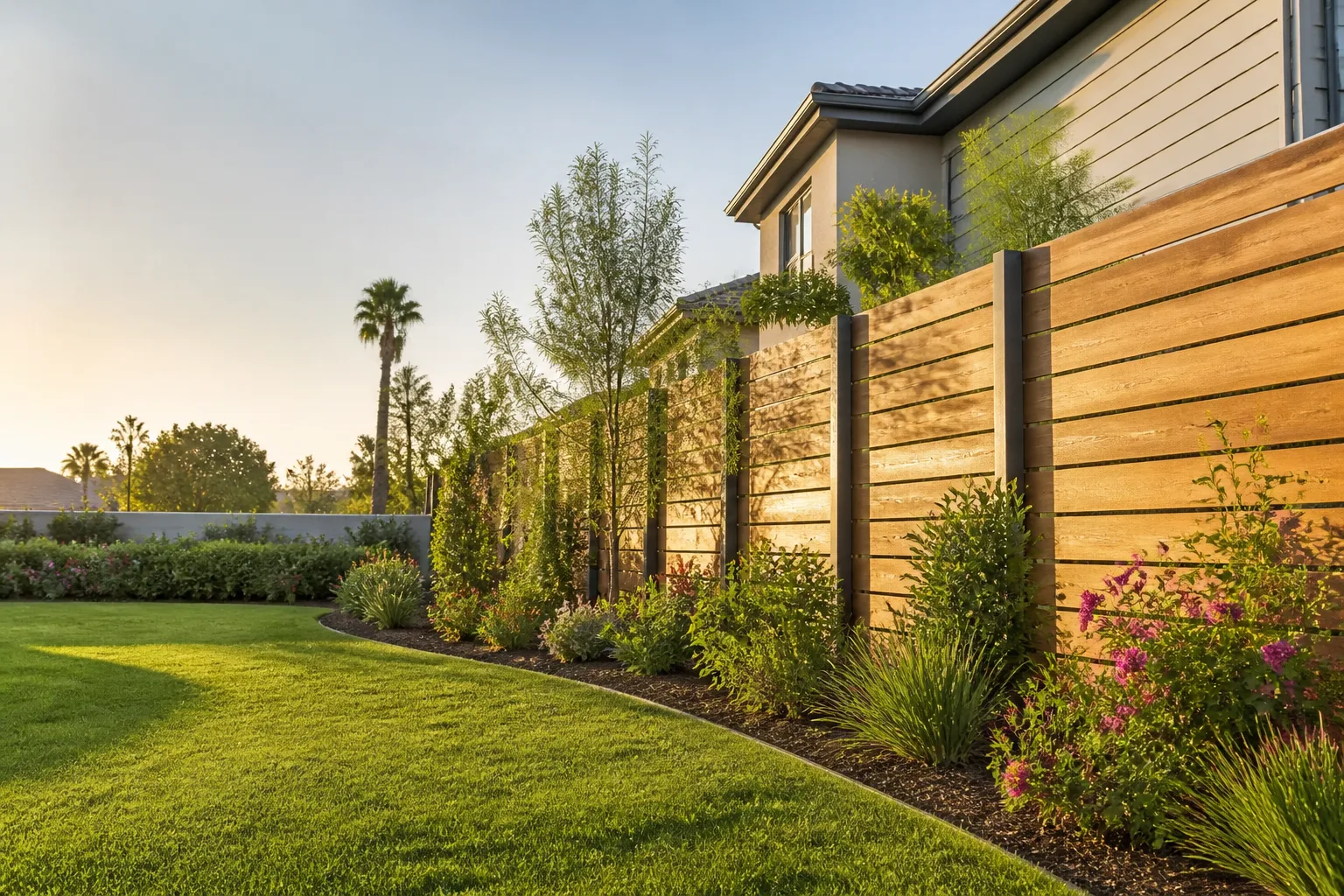
Plano’s UV index averages above 9 from May through September. That single number explains why an unprotected cedar fence here degrades at roughly twice the rate of the same fence 500 miles north. The stain that holds four or five years in a cooler climate needs reapplication every two to three years in Plano, and the inspection that people treat as optional elsewhere is the difference between a fence that lasts two decades and one that fails in ten. This guide lays out the exact schedule we’ve watched hold up on Plano fences: what to inspect, when to call a professional for honest advice, which stain products survive Texas sun, and how to log the work for resale.
Quick Answer
A cedar or pine privacy fence in Plano needs an annual inspection every March after the last freeze, a full cleaning each April, and a penetrating oil-based stain reapplied on a two-to-three-year cycle, ideally in May or October rather than mid-summer. On that documented schedule, a wood fence reaches a 15 – 20 year lifespan. Skip it, and the same fence fails in 8 – 10. The annual maintenance cost of $150 – $300 is the cheapest line item on your property.
Styles & brands we work with
- Kitchen remodeling
- Bathroom remodeling
- Home additions & ADU
- Roofing
- Windows & doors
- Driveway & pavers
- Fence
Table of Contents
- Why Plano fences age faster than the national average
- The annual inspection protocol: pass/fail measurements
- Stain specifications that hold up in Texas UV
- The month-by-month Plano fence calendar
- Maintenance cost versus replacement cost
- The maintenance log that protects your resale
- Frequently asked questions
Why Plano Fences Age Faster Than the National Average
A wood fence fails from the inside out, and three forces drive that failure in Plano faster than almost anywhere else in the country. Understanding them explains why the national “stain every five years” advice is wrong here.
- UV radiation. UV index readings above 9 for five straight months break down lignin in the wood, the natural glue holding the fibers together. The surface turns gray and, more importantly, becomes porous. Once a board is gray, it absorbs water like a sponge.
- Clay soil movement. Plano’s expansive black clay swells when wet and shrinks hard when dry. That seasonal movement works on fence posts constantly. A post set three decades ago in stable Midwestern soil had none of this, and a Plano post that survived two wet springs can develop movement in one dry summer.
- Freeze-thaw and moisture cycling. The February freezes of recent years follow warm spells, which is the worst combination for wood. Water seeps into a check or crack on a mild afternoon, freezes overnight, expands, and widens the crack. Repeat that a dozen times and a hairline split becomes a board replacement.
We’ve seen this play out most in the older subdivisions off Legacy Drive and around the original Plano core, where fences built in the 2000s are now on their second stain cycle and showing the difference between upkeep and neglect. A fence on the west or south face of a property takes the most sun and always fails first, so the “two-to-three-year” stain window is really a two-year window for those boards and a three-year window for the shaded north run.
The Annual Inspection Protocol: Pass/Fail Measurements
Nobody needs equipment to inspect a fence. You need three specific checks with hard numbers, because “looks about right” is how fences get to the point of no return.
Walk the entire fence line once a year in March, after the last hard freeze, and record what you find. Here are the three measurements that matter:
- Post wobble: zero tolerance. Grab each post about chest height and push firmly left and right. There should be no movement. A post that gives even a quarter inch has failed at the soil line, often because the concrete footing cracked or the post itself rotted below grade. Note the location, because a wobbly post carries the fence weight on the corner and can take two or three surrounding boards with it when it goes.
- Board gap: 1/2 inch maximum. Between adjacent vertical boards, gaps naturally open and close with seasonal moisture. A persistent gap wider than a half inch means the board has cupped, shrunk past recovery, or pulled away from the rail. Those boards are replacement candidates before the next windstorm, not after. Check them from both sides; a board can look tight from the street and be separated from its rail on the inside.
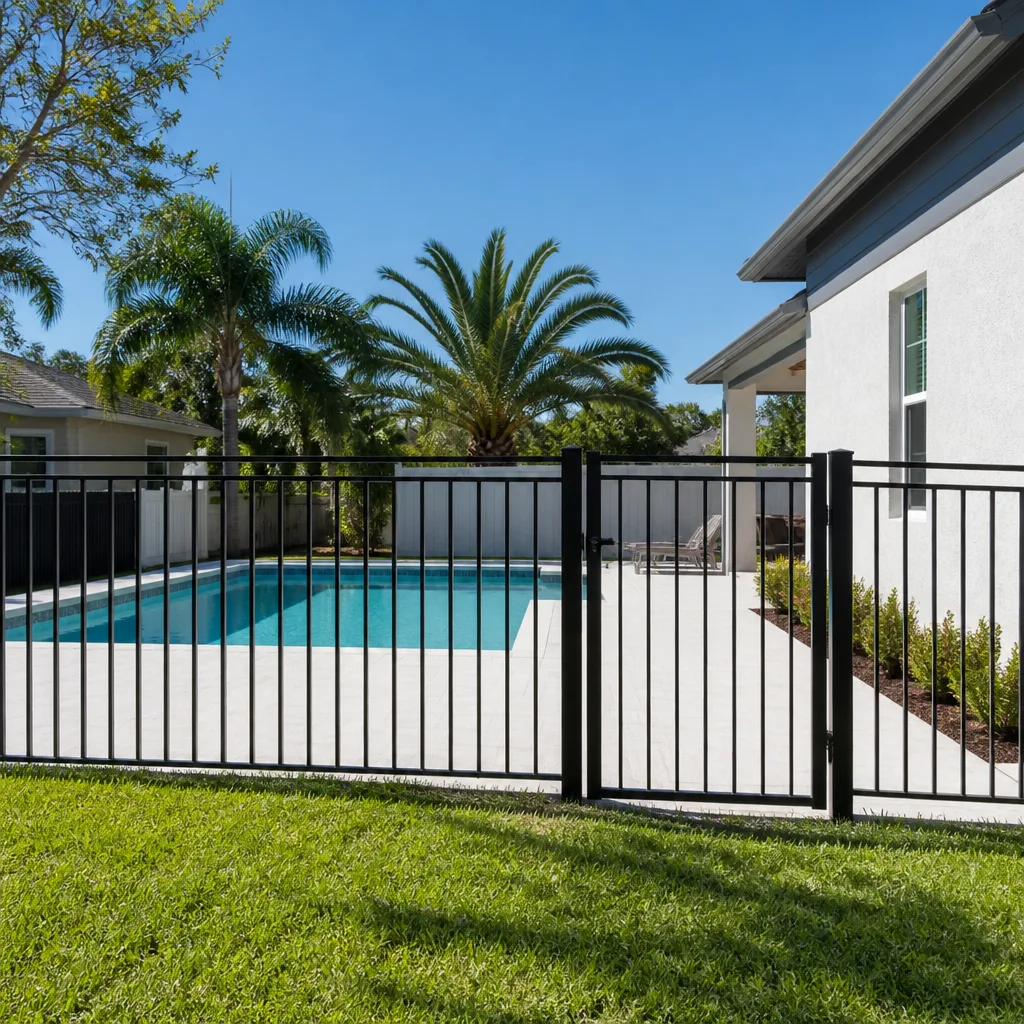
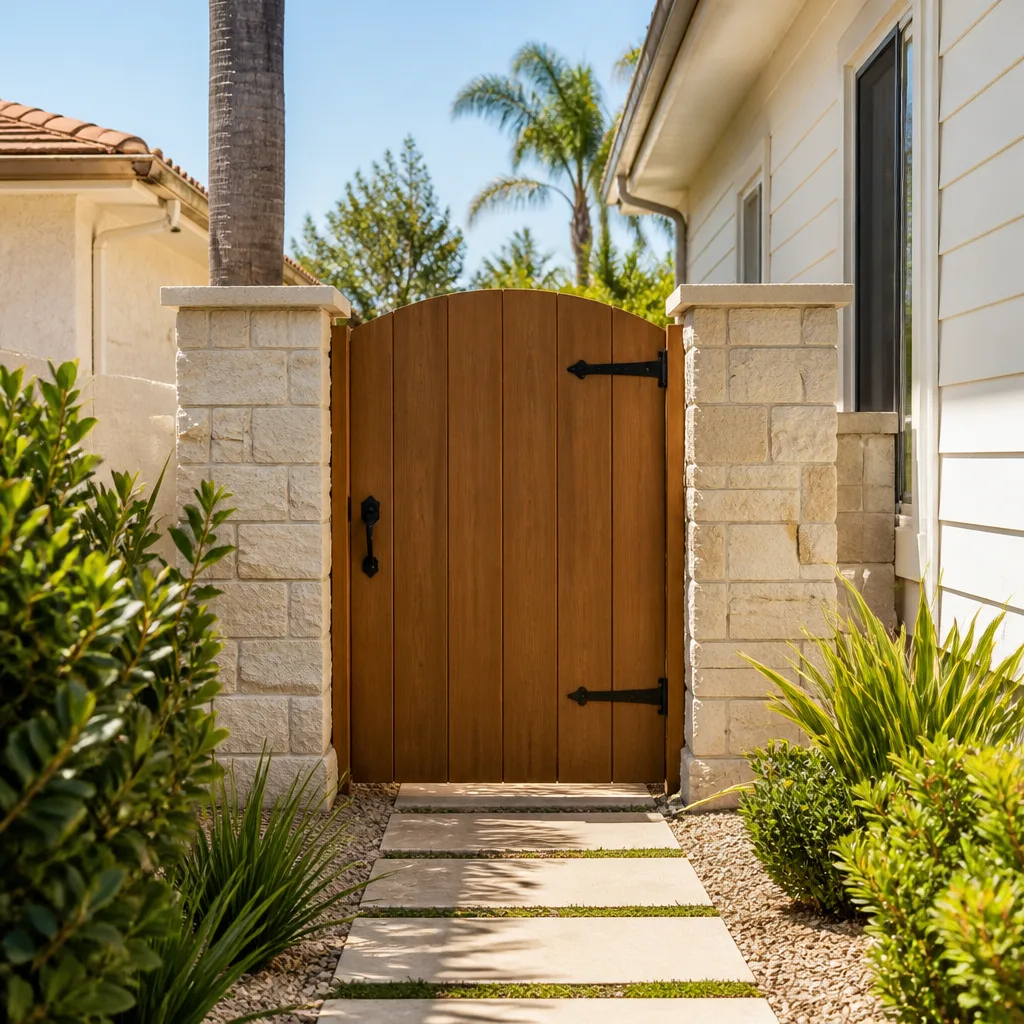
- Gate latch height: 1/4 inch change. Measure and note the distance from the ground to your gate latch each year. A rise or drop of a quarter inch means the gate post has moved. This is the easiest early-warning indicator on any fence, because the gate post carries the most load and the gate itself is a lever. Warped gates come from moved posts, not from gate hardware.
Record the results in a log (more on that below). We take this same baseline on every fence we install, and we can show a Plano homeowner their original gate measurements against this year’s. It’s the documented-photo approach we bring to every job: say what we found, not what we felt about it.
Stain Specifications That Hold Up in Texas UV
The stain decision is where most Plano fence owners lose the lifespan they already paid for. Two product families exist, and the differences matter enormously in this climate.
Penetrating oil-based stains soak into the wood fibers rather than sitting on top. Brands like Armstrong Clark and TWP are the two most trusted names in this category, and both hold a two-to-three-year window in Plano’s UV. Because they penetrate, they don’t peel. They fade, and when it’s time to recoat you clean and apply another coat, no stripping required. This is the correct choice for cedar and pine in Texas sun.
Film-forming stains sit on the surface like an acrylic skin. They look great the first year. Then UV breaks the film down, moisture works behind it, and it peels in sheets. Once a film-forming stain has peeled, you’re looking at chemical stripping and sanding before you can recoat, which can cost more than the fence is worth. They perform acceptably on exterior doors and short runs, but across a long, sun-exposed Plano fence line, they fail faster than the penetrating product every time.
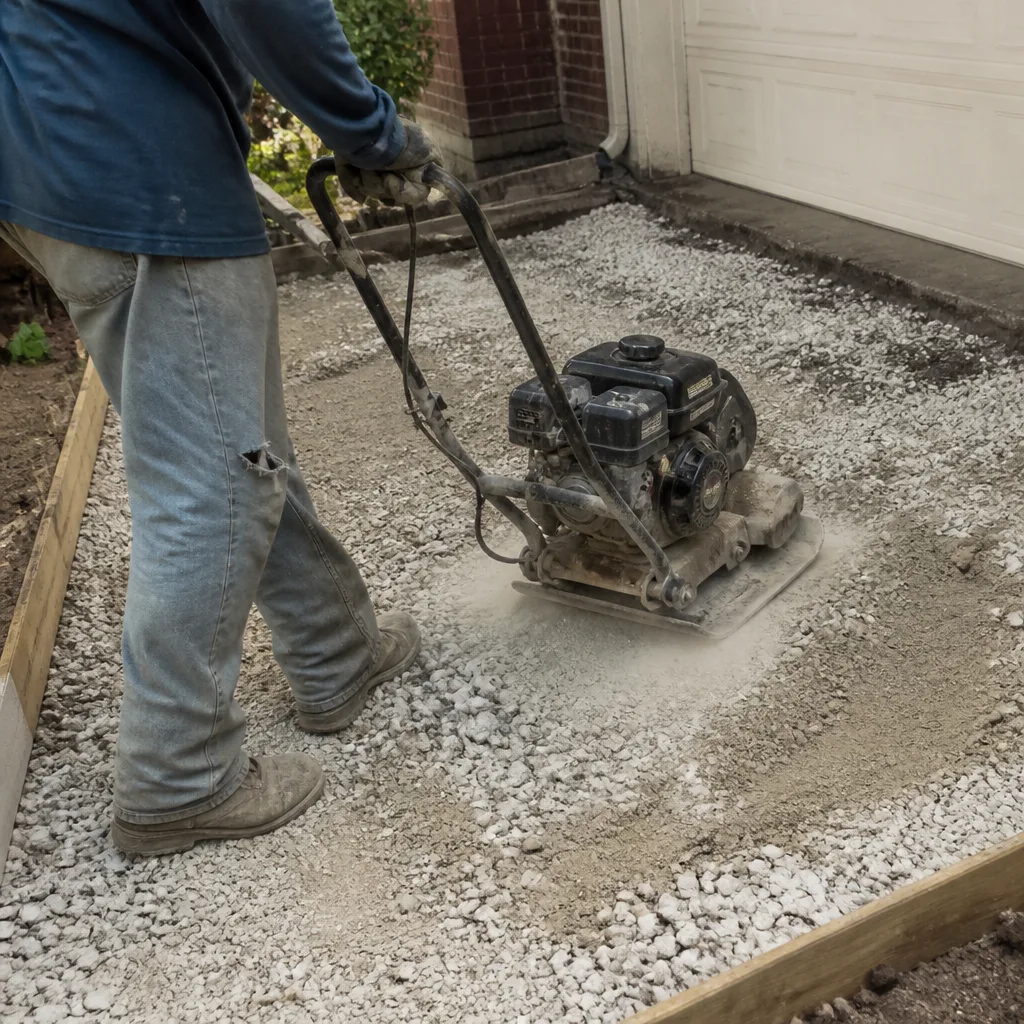
Under the terms of a proper installation, we specify the penetrating product in writing and note the recoat window in the paperwork, because the stain matters as much as the wood brand. Fence installations done through our Fence Installation in Plano trade always carry the product name on the written scope, and we extend the same to the pavers and hardscape under our Driveway & Pavers in Plano service when the two jobs are quoted together. A $40-per-gallon penetrating stain is cheaper than the $4,000 fence it protects.
The Month-by-Month Plano Fence Calendar
Timing is half the value in a climate this aggressive. Staining in Plano in July is money burned, because the product cures too fast and the wood is dry enough that it drinks unevenly. Here’s the cycle we recommend.
- March: inspect. After the last hard freeze, walk the fence and run the three measurements above. Note wobbling posts, gaps over a half inch, and gate latch height.
- April: clean. Wash the fence with a deck and fence cleaner or a diluted oxygenated bleach solution. Remove pollen, mold, and grayness so the stain can bond. Give it three to four dry days to fully dry before staining.
- May or October: stain. These are the two windows where Plano’s temperature and humidity are right for the product to cure properly. Never stain in July or August. If a stain can be applied in the fall, the October window is best because the fence carries the protection through the winter.
- October: hardware check. Tighten gate hinges, check the latch strike plate, and look at the post caps and rail brackets. Small hardware movement is easy to correct in the fall and prevents gate sag by spring.
- November through February: rest and observe. Don’t stain during the cool, damp months; the product won’t cure. If a freeze is forecast, check for boards that may catch wind and secure or replace them before it hits.
That’s five items on a calendar. If you do nothing else, do the March inspection and the May stain.
Maintenance Cost Versus Replacement Cost
The numbers here are blunt, and they’re the reason we wrote this guide.
| Item | Regular schedule | Deferred 3+ years |
|---|---|---|
| Annual inspection + minor repairs | $100 – $200 | – |
| Cleaning | $50 – $100/year | – |
| Stain (per application, 150 LF) | $400 – $700 every 2 – 3 years | – |
| Board or post replacement | 1 – 3 boards/year | Full section or run |
| Total cost, 10 years | $1,500 – $3,000 | – |
| Full fence replacement (150 LF) | – | $4,000 – $9,000 |
Annual upkeep lands around $150 – $300 per year on average across a standard residential property. Deferring for three or four years accelerates rot and lets failing posts weaken their neighbors, which is exactly how a fence goes from routine maintenance to full replacement in one summer. The replacement band for 150 linear feet of cedar fence in the current Plano market runs roughly $4,000 – $9,000 depending on height, style, gate count, and whether you remove the old fence. Maintained on schedule, that same fence reaches 15 – 20 years. Skipped, it averages closer to 8 – 10. When the fence is at the end of its life anyway, a full replacement is often the cleaner economy, and that’s a decision we quote in writing before anyone picks up a tool.
The Maintenance Log That Protects Your Resale
A maintenance log is four columns on a single sheet of paper. But it protects real money at resale.
- Date. The date of the inspection or the work.
- What was found or done. Example: “Found gate latch height +1/4-inch; post 4 pulled. Replaced 2 boards, reset post footing.”
- Product used. Record the brand and the product name: an Armstrong Clark semi-transparent oil, for example. If a future buyer wants to match or maintain it, they know exactly what to use.
- Next scheduled date. For a stain, this is a date three years out. Set a reminder in your phone.
Attach the receipts and note the date of each stain, plus whether the gate hardware was tightened. When a buyer’s inspector walks the fence in Plano, a logged, maintained fence with recent stain dates reads as a documented asset, and the buyer’s real estate agent notices. An unmarked gray fence with a wobbly gate reads as a $6,000 deduction off your asking price. A Plano homeowner with a complete log can show the buyer exactly when each stain was applied and with what. The log turns “the fence seems fine” into a record. Rowan’s construction and home trade services deliver that same documented photo record with every visit, so if you’re handling other projects while your fence is being maintained, it’s the same evidence you’d want to keep. It’s the closest thing a fence has to a service record, and a buyer at a high price will respect it.
See the difference
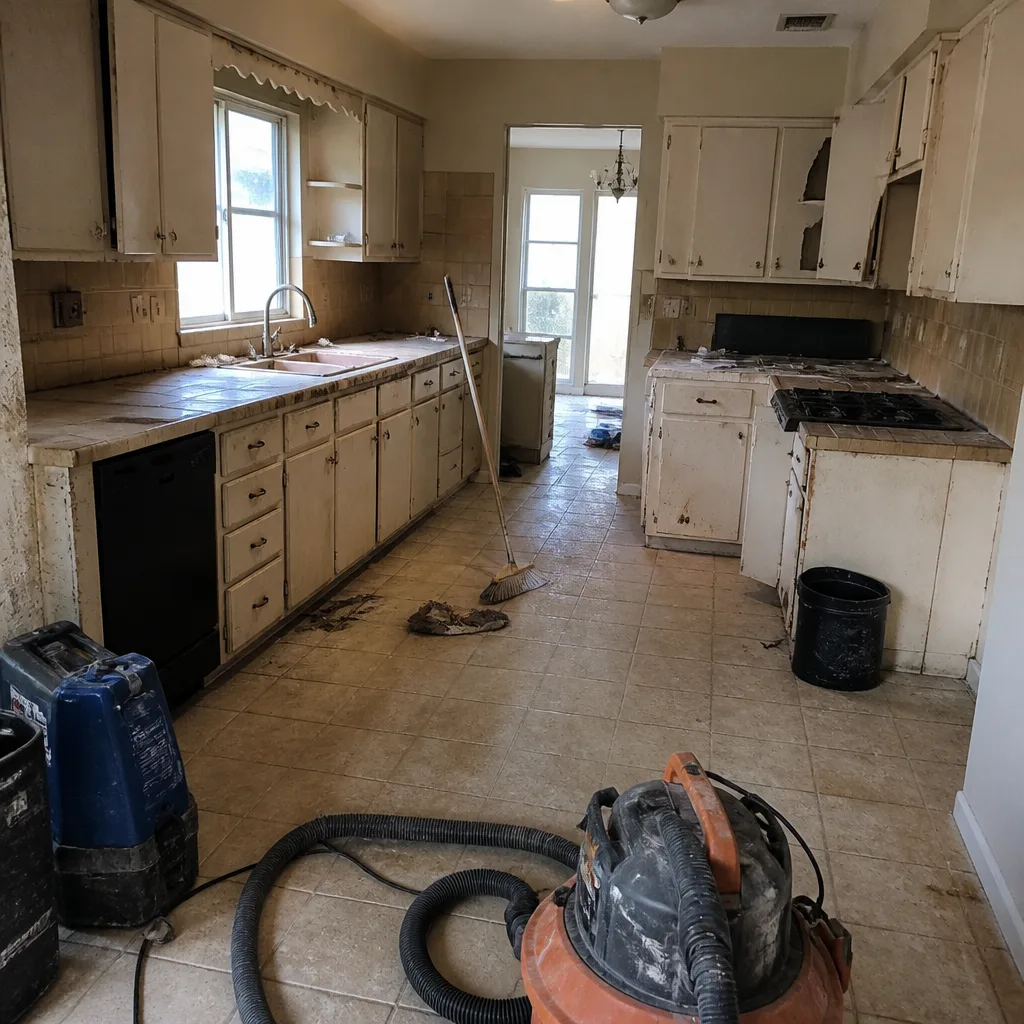 Before
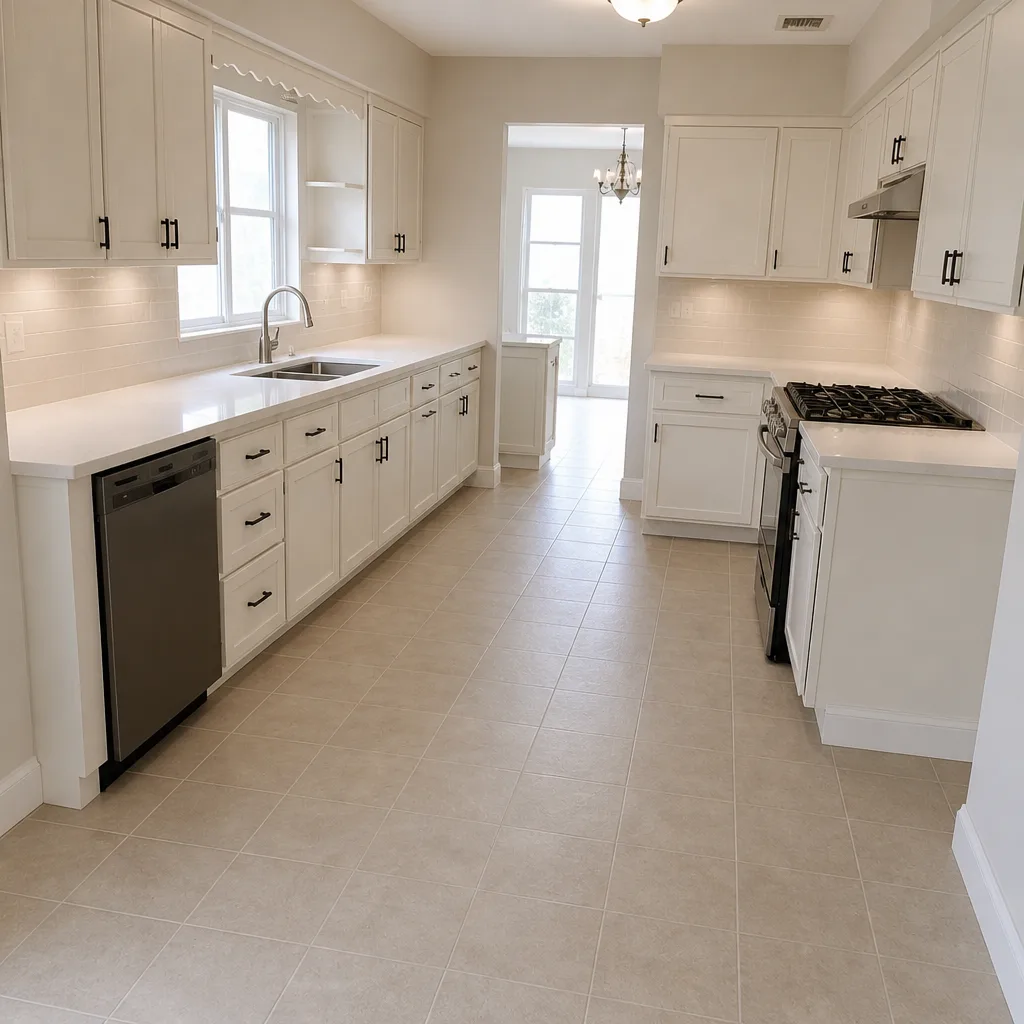 After
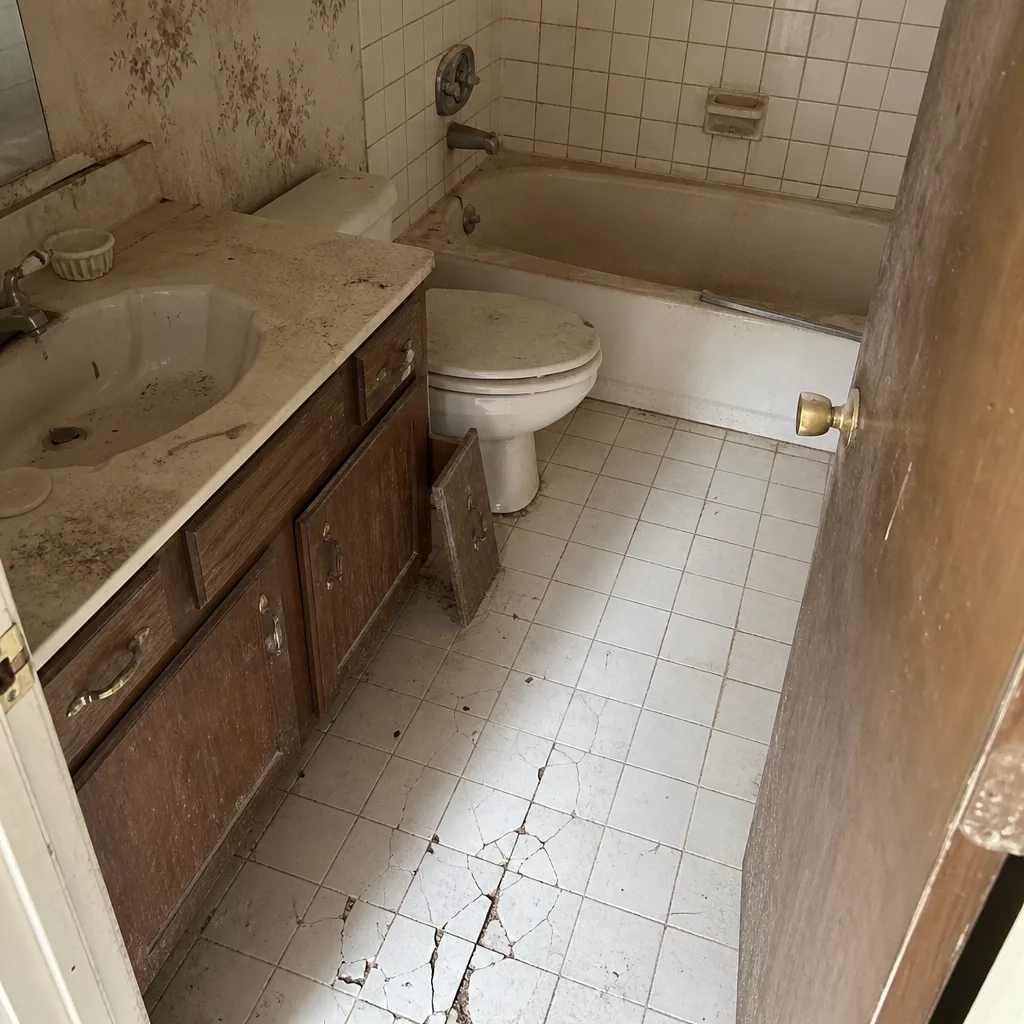 Before
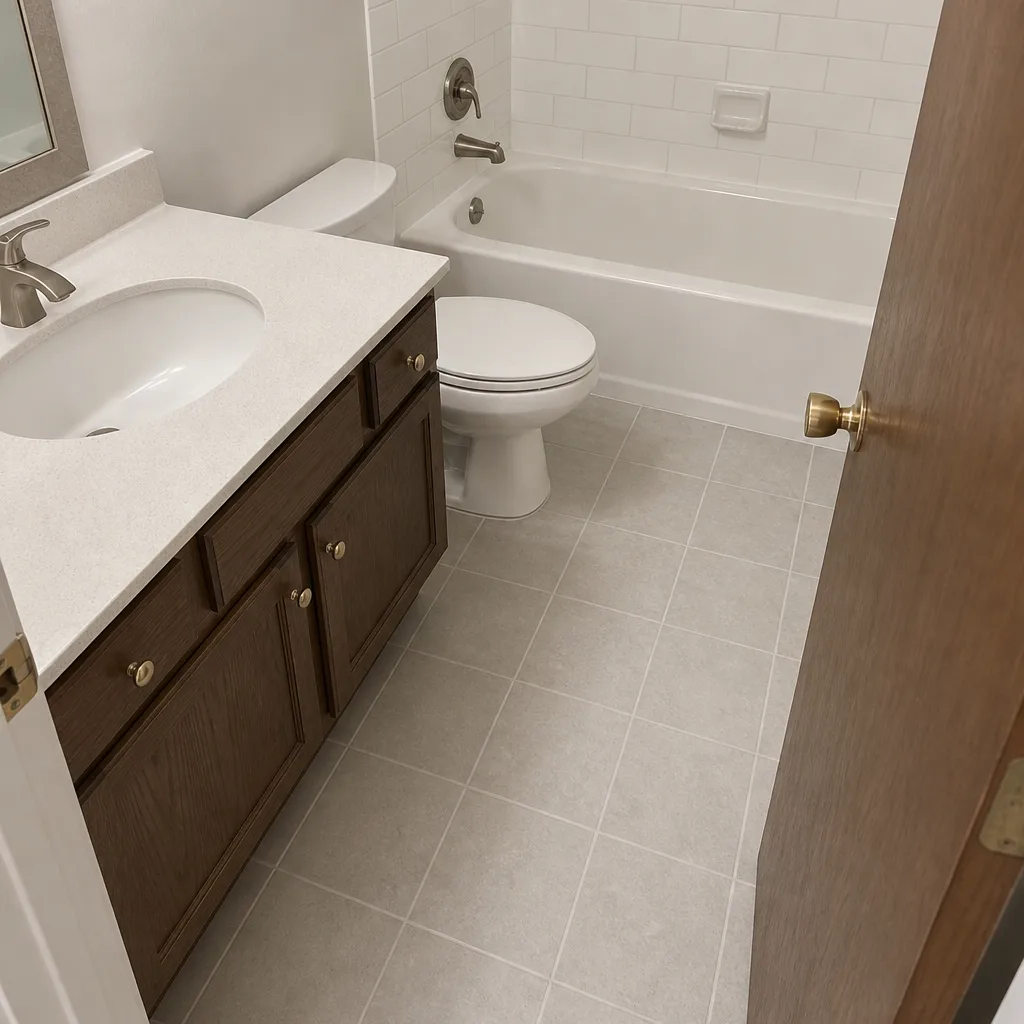 After
 Before
 After
Common Mistakes to Avoid
- Staining in July or August. Plano heat makes the stain cure too fast and set unevenly, and the wood is at its driest. The May and October windows are the correct choices, and the difference in longevity is significant.
- Using a film-forming stain. The surface looks good for one summer, then peels. Stripping it later costs more than the original stain job. The penetrating oils (Armstrong Clark, TWP) cost a little more per gallon and pay for themselves twice over.
- Skipping the March inspection after a freeze. A post that shifted during a February freeze will carry the weight of every board on that run into summer. A free five-minute check in March catches it before the wind does.
- Icing the stain over a dirty fence. Plano pollen season puts a film on horizontal rails that stain won’t bond to. Clean in April, stain in May, and not the other way around.
- Ignoring gate latch height drift. A quarter inch of change seems trivial until the gate stops latching. At that point the post has likely moved and the repair is bigger than a hinge adjustment.
- Letting the fence dry out unprotected for two years. The first 24 months after installation matter most, and yet it’s exactly when owners think no maintenance is needed. A fresh fence should be stained after its initial dry period, and the two-year recoat keeps it ahead of grayness.
- Not logging the work. The log is cheap to keep and no seller regrets having it. Most Plano fences fail without any record of when the last stain went on.
When to Call a Professional
Most of this guide is homeowner-facing work, and that’s deliberate. Some of it is not a Saturday job. Call a professional when you find more than one wobbling post, when a gate post has moved and the gate sags, when a full fence run has more than 15 – 20 percent board loss, or when a fence is showing rot at the footing line. Replacing a load-bearing post in Plano’s clay soil takes the right concrete and the right setting depth, and a bad repair fails within a season. If a fence is in the range we quote, it’s usually cleaner to reinstall than to patch. Rowan Construction Group Plano offers free estimates in Plano and quotes a written flat price before any work starts, with the same discipline behind a fence install as a full house project. Call (844) 761-8346. If you’re also considering an ADU or addition and want to coordinate the fence with the grading, our Home Additions & ADU in Plano trade handles both scopes on one written plan.
Frequently Asked Questions
Every two to three years with a penetrating oil-based stain, and never in July or August. Plano’s UV index above 9 from May through September breaks down stain noticeably faster than the five-year interval common in cooler markets, so the two-year cycle for full-sun runs is the safe pace, and the three-year cycle for shaded north runs. Call (844) 761-8346 for an exact quote – estimates are free.
Three specific things: post wobble (zero tolerance), board gaps (no more than a half inch before replacement), and gate latch height (a quarter-inch change means the gate post has moved). Do this in March, after the last freeze. Call (844) 761-8346 if a post is loose or a gate has shifted.
Fifteen to twenty years on a documented maintenance schedule, and closer to eight to ten years if maintenance is skipped. The difference is almost entirely annual inspection plus the stain cycle; the wood itself is not the deciding factor. We inspect and quote fence repairs in Plano with a written flat price – call (844) 761-8346.
Penetrating oil-based stains, specifically the Armstrong Clark and TWP product lines, hold up best because they soak into the wood rather than forming a peel-able film. Film-forming stains fail quickly in Plano’s heat and require stripping when they peel. We put the product name in writing on every scope. For a written price and second opinion on any competitor’s estimate, call (844) 761-8346.
Usually yes, but there’s a threshold. One or two boards or a single gate post can be repaired for $150 – $400. Once more than about 15 – 20 percent of the boards are showing rot, or more than one post has moved, replacement is the cleaner economy at $4,000 – $9,000 for 150 linear feet in the Plano market. Call (844) 761-8346 for a written quote on either scope, with the site inspections and photo record included.
Yes, within the first one to two years. Cedar and pine need an initial dry period before the first stain coat, but delaying that first coat lets the UV gray the boards and closes the stain’s window. The first recoat extends the lifespan more than any later coat. Call (844) 761-8346 to schedule an inspection of your new fence and a written maintenance plan.
The Bottom Line
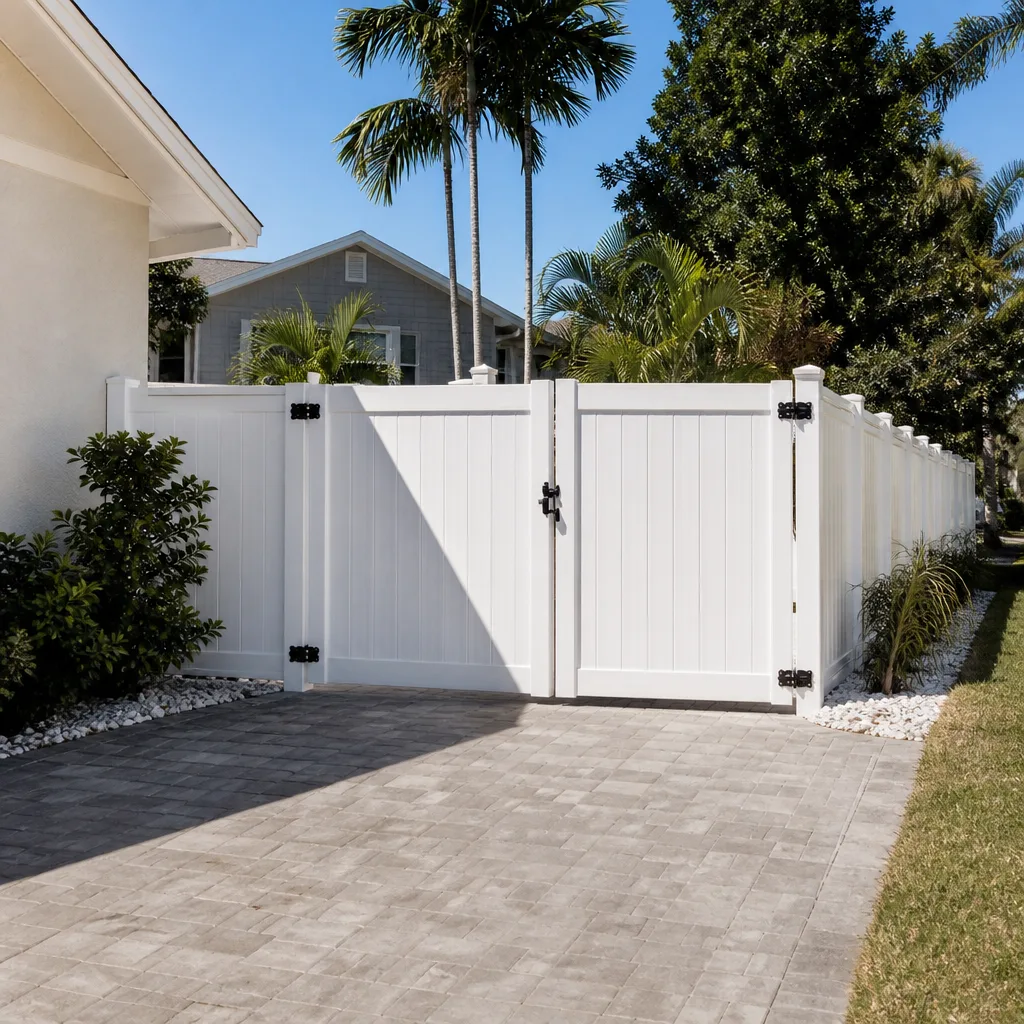
The difference between a 20-year fence and a 10-year fence in Plano is not the fence. It’s a March inspection, an April cleaning, an October hardware check, and a penetrating oil stain on the two-to-three-year cycle. The full cost of that schedule runs roughly $150 – $300 per year, versus a $4,000 – $9,000 replacement bill when it’s skipped. Log each date, product, and finding, and the log yourself becomes part of your home’s resale evidence. Call (844) 761-8346 to schedule a free estimate or a second opinion on any written estimate; Rowan Construction Group Plano delivers a written flat price and a documented photo record on every visit.
Written by the team at Rowan Construction Group Plano.